
Illex coindetii / Todarodes sagittatus
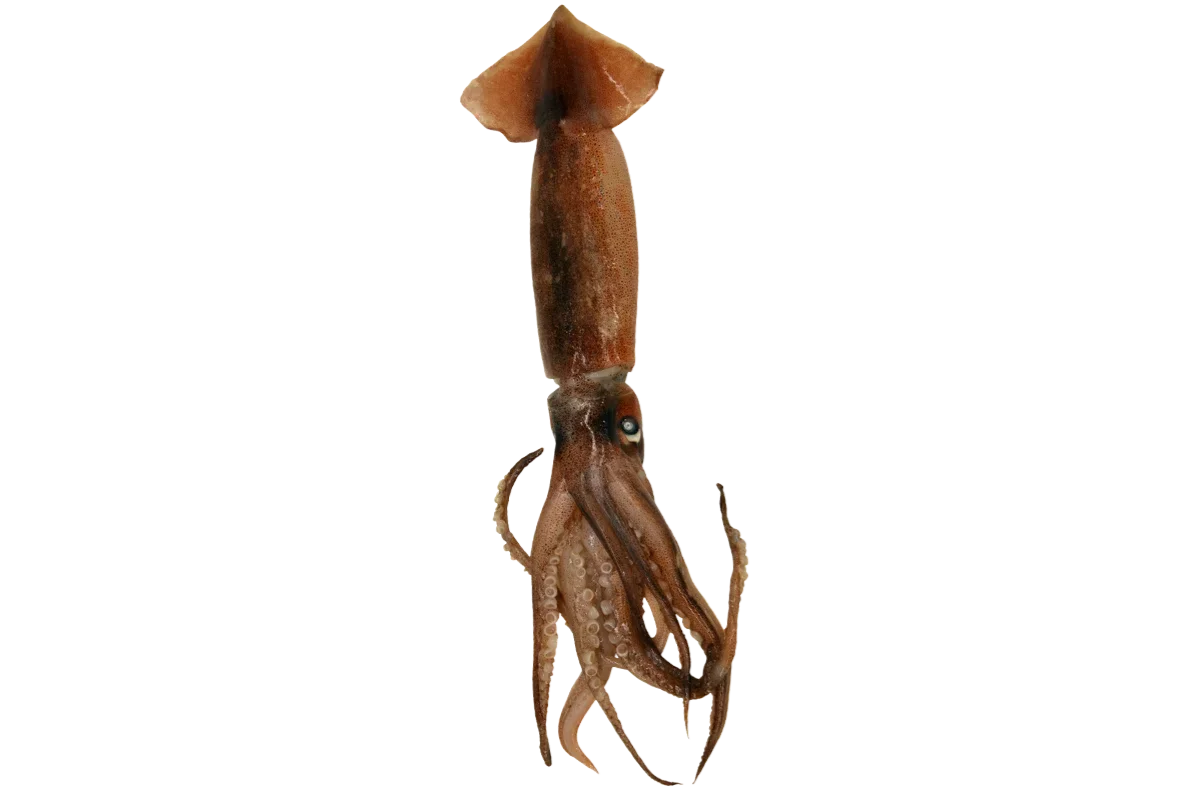
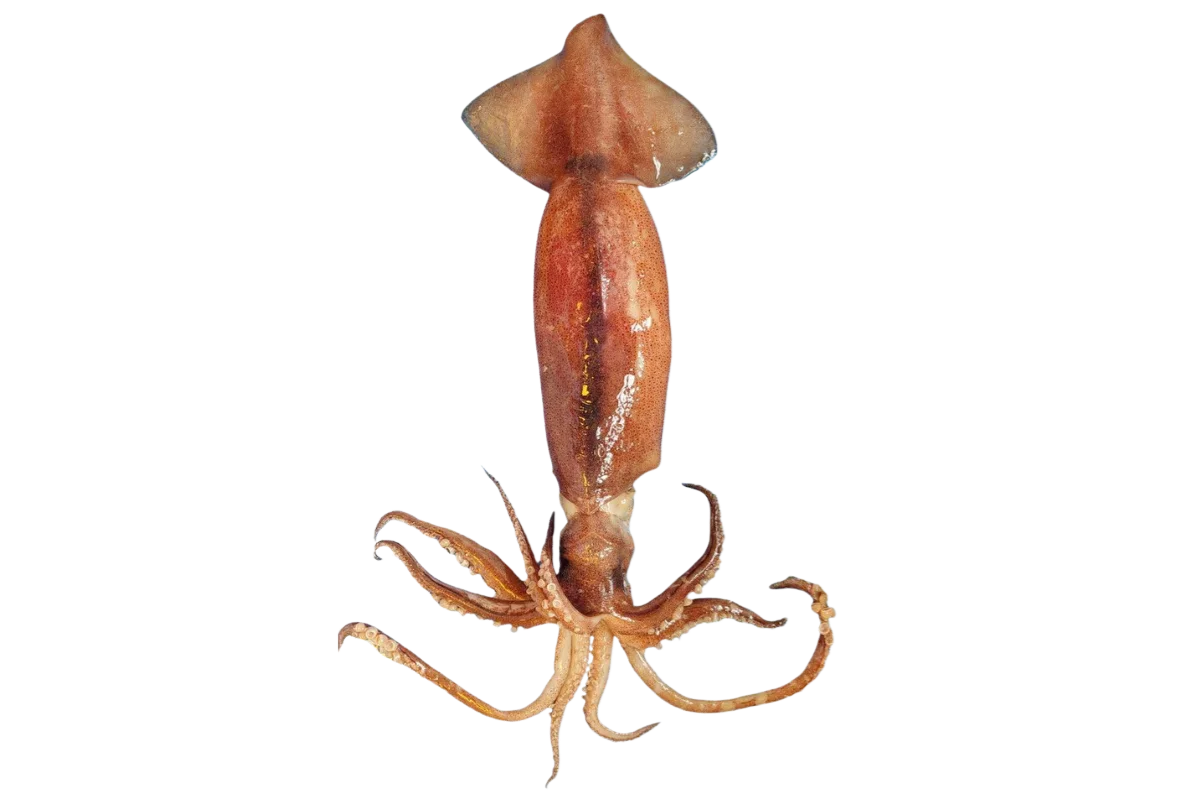
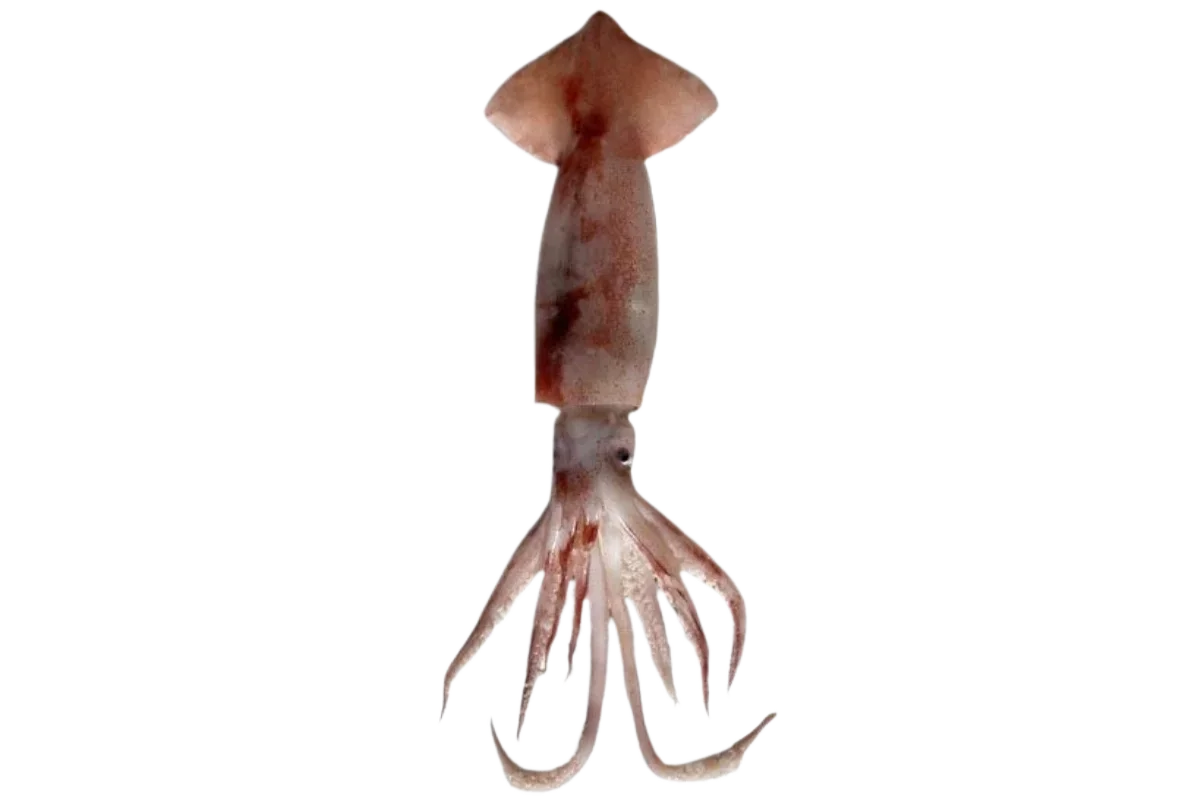
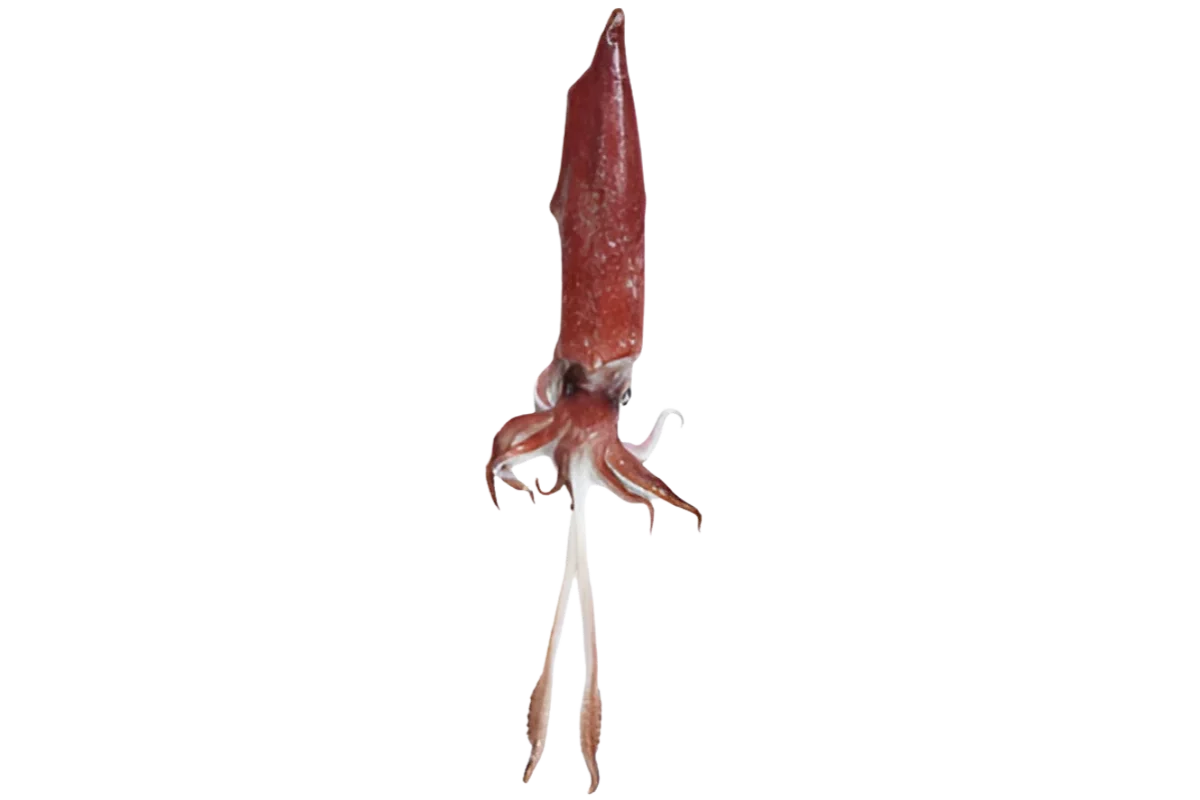
The Broadtail Shortfin Squid is a cephalopod mollusc that is often confused with the common squid, even though it is a different species with distinct anatomical features. The body is cylindrical and ends in two small triangular fins at the back, which form a point resembling an arrow or the tail of a rocket. This is the primary difference from the common squid, which has much larger fins that cover most of its body. It possesses eight tentacles and two longer hunting tentacles to grab its prey.
In the Mediterranean, two main species are encountered. The Broadtail Shortfin Squid is the most common in the market, while the European Flying Squid is larger and has the ability to propel itself out of the water to avoid predators.
This is a species that lives primarily in deep waters and the open sea. During the day, it remains at great depths ranging from 100 to 800 metres near the seabed. At night, it performs vertical migrations by rising toward the surface to hunt.
The animal is an extremely voracious and aggressive hunter. It feeds on fish such as anchovies, sardines, and hake, as well as pelagic crustaceans. It also displays intense cannibalism because larger individuals often eat smaller ones of the same species.
It is caught primarily by professional vessels using bottom trawls and special squid jigs that use bright lights at night to attract schools to the surface. The meat is tougher and less sweet than that of the common squid, and therefore its commercial value is lower. It is ideal for frying once tenderised, or for use in various stews and cooked dishes.
The International Union for Conservation of Nature classifies both species as Least Concern because their populations are abundant. Scientific studies have shown that these animals play a critical role in the ecosystem as food for large marine animals such as swordfish, tuna, and dolphins. Research on their age using ear bone statoliths confirmed their rapid growth rate, allowing them to double their weight in a very short period of time.
| Country | Local Name |
|---|---|
| 🇮🇹 Italy | Totano |
| 🇪🇸 Spain | Pota |
| 🇫🇷 France | Encornet rouge |
| 🇹🇷 Turkey | Mızrak kalamar |
| 🇲🇹 Malta | Totlu |
| 🌍 North Africa (Tunisia/Libya/Egypt) | Totano or Encornet |
| 🌊 Adriatic Coast (Croatia/Slovenia) | Totan |
| 🇬🇷 Greece | Thrapsalo |