
Brama brama
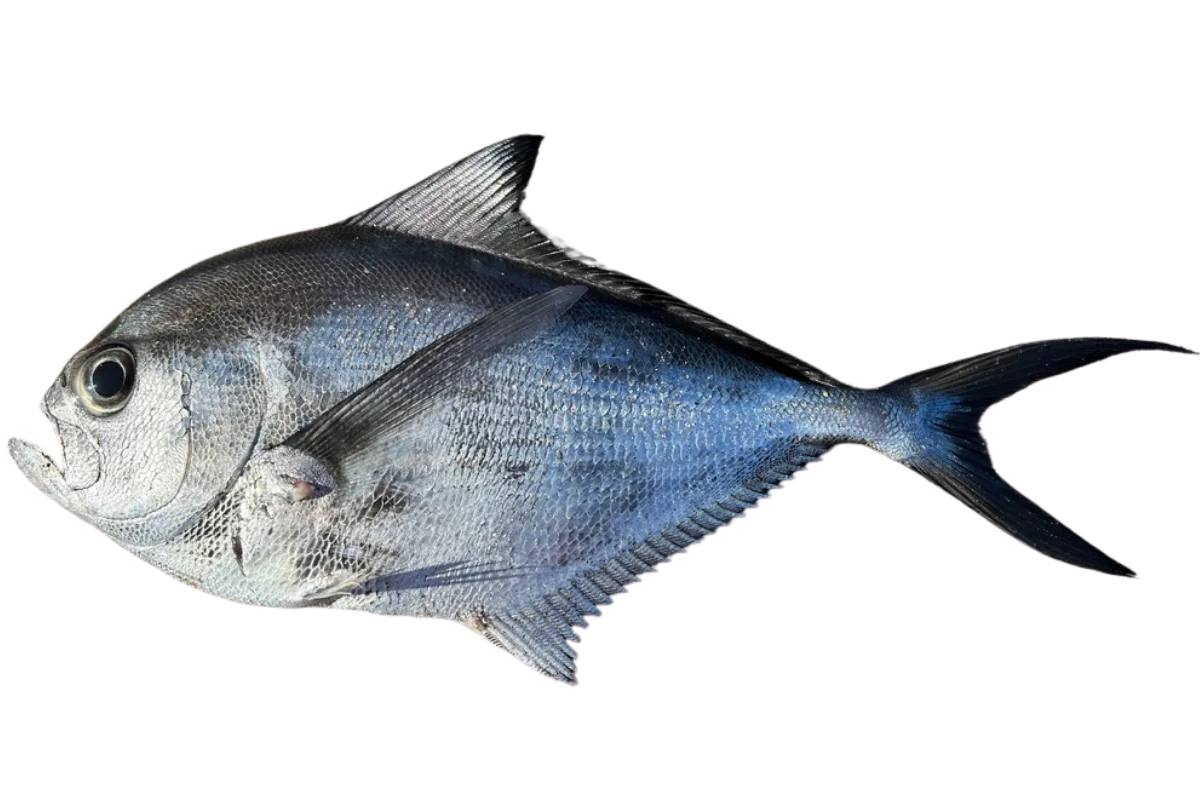
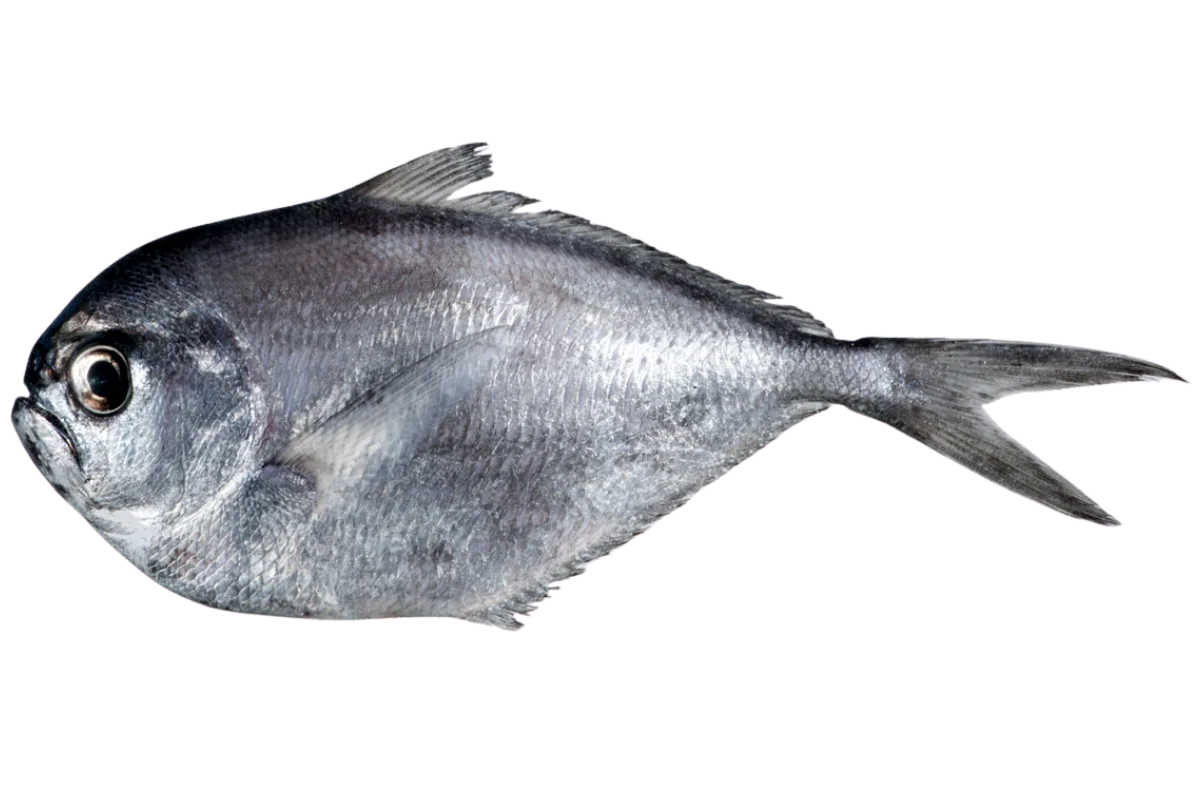
The Atlantic Pomfret is a unique and mysterious open-sea fish belonging to the Bramidae family. Its body is extremely deep and compressed on the sides with a shape that strongly resembles a diamond or a disc. The head is short, and the forehead profile is curved and steep. The dorsal and anal fins are very long and covered with scales, while the tail is deeply forked in a V-shape to enable fast swimming.
An impressive feature consists of the change in appearance as the fish grows. Young individuals have a bright silver colour and live near the surface. Adult fish acquire a dark, metallic grey or black colour, with occasional greenish reflections on the back, to camouflage themselves in the dark depths.
This is a purely pelagic and oceanic species that travels great distances. It lives primarily in the open sea, far from the coast. Adult individuals are bathypelagic, meaning they live at depths of 100 to 1000 metres during the day. At night, they perform vertical migrations by rising to shallower waters to feed while following the movement of zooplankton and small fish.
The Atlantic Pomfret is a medium to large fish. The usual length of capture ranges from 40 to 60 centimetres. However, it can reach a maximum length of 1 metre and a weight of 6 to 8 kilograms, although larger weights are sometimes reported in the ocean.
The animal is an opportunistic and active predator. It feeds mainly on small pelagic fish such as anchovies and lanternfish, as well as cephalopods like squid. It also consumes pelagic crustaceans such as shrimp and copepods, which are abundant in midwaters.
Fisheries & Economic Value
It is not a primary target of commercial fisheries in regional waters. Still, it is often caught as bycatch in surface longlines intended for swordfish and tuna, as well as in deep trawls. In Spain and Portugal, where it is more popular, it is a target species. The meat is of exceptional quality, white and firm, with a flavour that slightly resembles swordfish, and it has good commercial value in markets familiar with it.
The International Union for Conservation of Nature classifies the Atlantic Pomfret as a species of Least Concern at a global level. Scientific studies have shown that it is a species extremely sensitive to water temperature. Its migrations are largely determined by thermal fronts between 10 and 24 degrees Celsius. Research also indicated that it has a rapid growth rate and a short life span, usually not exceeding 9 years.
| Country | Local Name |
|---|---|
| 🇮🇹 Italy | Pesce castagna |
| 🇪🇸 Spain | Japuta or Palometa negra |
| 🇫🇷 France | Grande castagnole |
| 🇹🇷 Turkey | Baltabaş balığı |
| 🇲🇹 Malta | Brahma |
| 🌍 North Africa (Tunisia/Libya/Egypt) | Castagnole or Brama |
| 🌊 Adriatic Coast (Croatia/Slovenia) | Grboglavka |
| 🇬🇷 Greece | Brama or Lestia or Thalassobrama |