
Scyliorhinus canicula
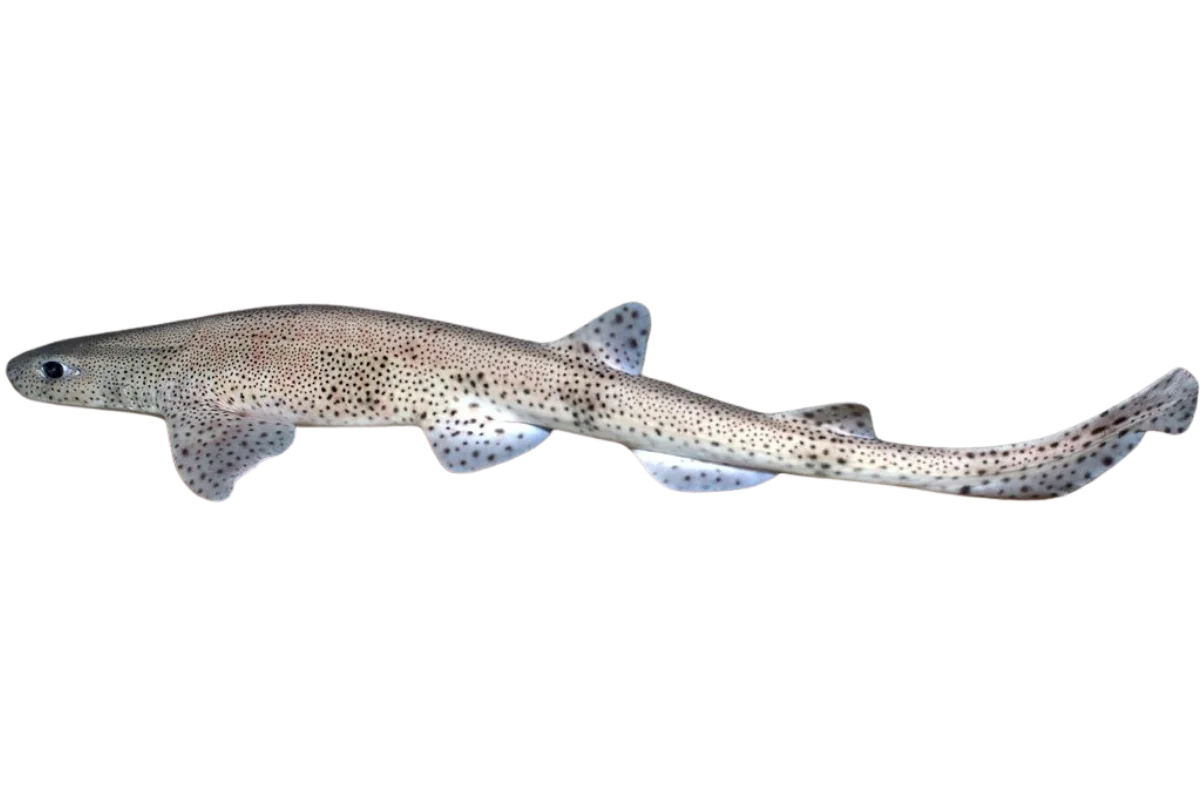
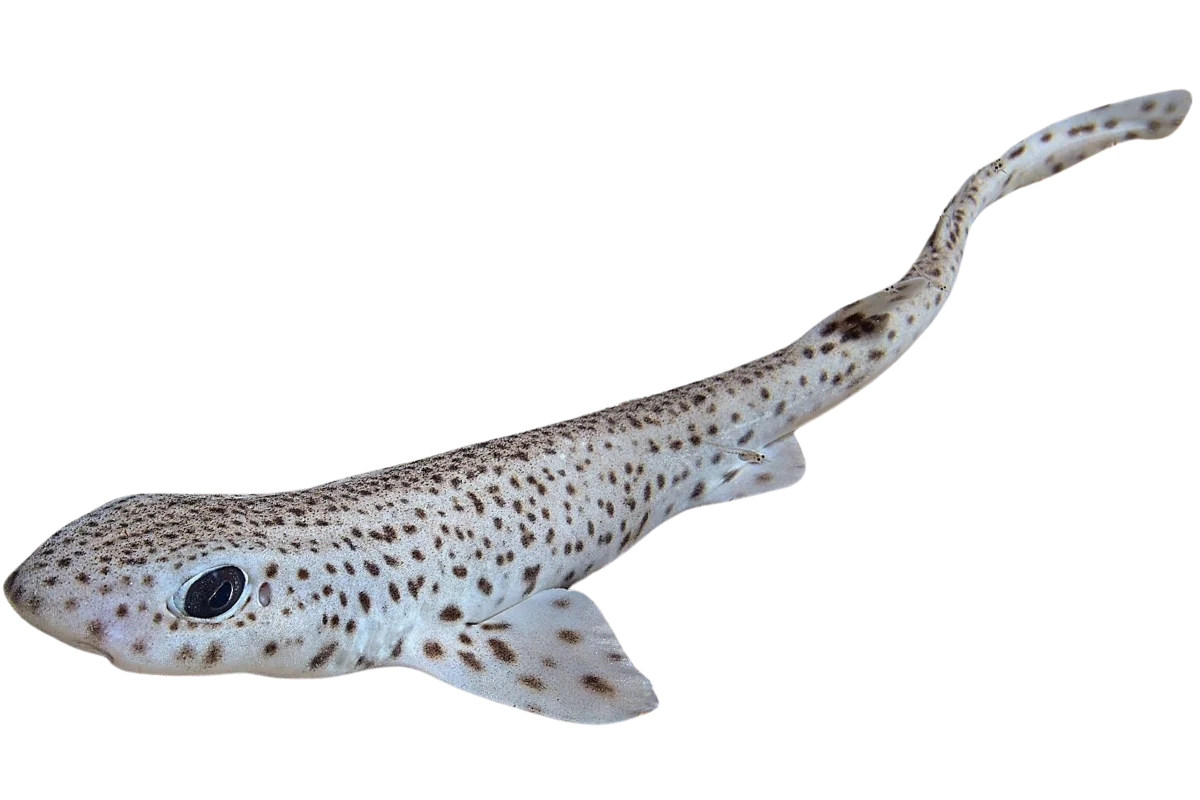
The Small spotted Catshark, which is also commonly referred to as the Lesser Spotted Dogfish or the Roughhound, is one of the most abundant, smallest and harmless sharks of the regional seas. It belongs to the Scyliorhinidae family, which translates to dog noses due to their characteristic snouts. The body is elongated and slender, with skin that is extremely rough like sandpaper. The colour is usually beige, brown, or grey, and it is covered with countless small, dark brown or black spots that look like freckles.
One of its most beautiful features is its large, oval eyes, which resemble a cat's. It is often confused with its relative, the Nursehound, but the Small spotted Catshark is smaller, and its spots are much denser and smaller in contrast to the large and sparse leopard-like spots of the Nursehound. Additionally, the nostrils of this species are connected to its mouth, while those of the Nursehound are separate.
This is a benthic species that spends most of its life on the seabed. It prefers sandy, muddy, or coralligenous bottoms as well as areas with seaweed. It is encountered across a wide range of depths from shallow waters of 10 metres down to 400 metres, although it is more common on the continental shelf between 50 and 150 metres. It is a nocturnal species. During the day, it remains motionless and curled up on the bottom, often in groups, and becomes active at night to hunt.
The species represents a small shark. The usual length of capture ranges from 20 to 50 centimetres. It can reach a maximum length of 80 centimetres, or rarely 1 metre, with females usually slightly larger than males.
The animal is an active, opportunistic bottom-dwelling predator. It feeds mainly on benthic invertebrates, including crustaceans such as crabs, shrimp, and lobsters, as well as molluscs like squid, octopus, and gastropods. It also consumes small bottom-dwelling fish such as gobies and weeverfish, as well as polychaete worms.
The Small Spotted Catshark is oviparous. Its reproduction is impressive and occurs almost year-round, with a peak in spring and summer. The female approaches shallow waters and lays pairs of eggs, which are protected inside hard, rectangular, and horny capsules. These capsules have long and curly fibres at their four corners, which get tangled in seaweed, sponges, or corals to keep the egg stable and oxygenated. The embryos develop inside the capsule for 5 to 11 months before hatching. The empty capsules that often wash up on beaches are commonly called mermaid purses.
It is caught in huge quantities as unwanted bycatch by bottom trawlers, set nets, and longlines. In regional markets, it has very low commercial value and is often discarded at sea. However, the meat is edible once the tough skin is removed and is used in some areas for frying or soup, though it is considered lower quality than that of the Smooth hound.
The International Union for Conservation of Nature classifies the Small Spotted Catshark as a species of Least Concern because its populations remain stable or even increase in some areas, possibly due to the reduction of its natural predators. Scientific studies have shown that it is an extremely resilient species with high survival rates even after being discarded from fishing gear, which contributes to the maintenance of its population.
| Country | Local Name |
|---|---|
| 🇮🇹 Italy | Gattuccio |
| 🇪🇸 Spain | Pintarroja |
| 🇫🇷 France | Petite roussette |
| 🇹🇷 Turkey | Kedibalığı |
| 🇲🇹 Malta | Gattarel |
| 🌍 North Africa (Tunisia/Libya/Egypt) | Petite roussette or Samak al skylopsaraki |
| 🌊 Adriatic Coast (Croatia/Slovenia) | Mačka blidica |
| 🇬🇷 Greece | Skylopsaraki or Skylaki or Skyloulis |