
Anguilla anguilla
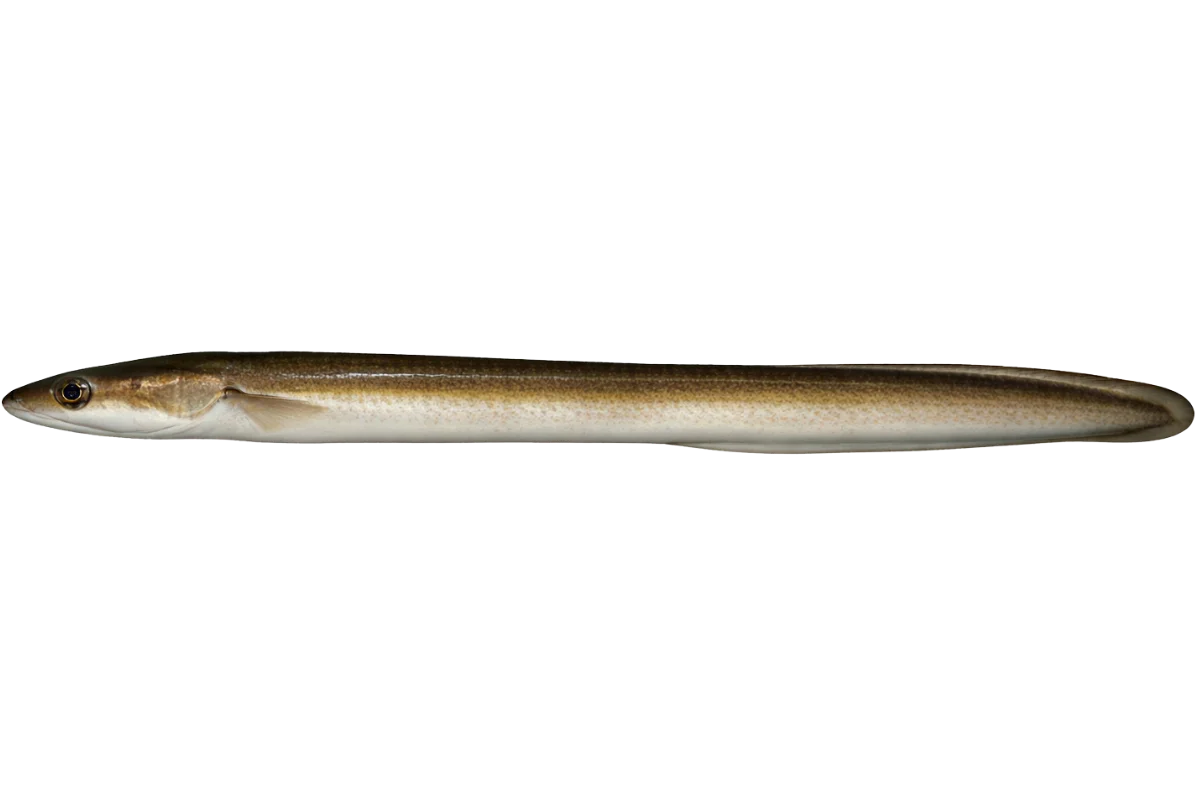
The blood of the European Eel contains a powerful protein toxin which is poisonous to humans and mammals. Contact of raw blood with the eyes or with open wounds can cause inflammation and infection, while ingestion leads to poisoning. This toxin is heat-labile, meaning it is destroyed by cooking at temperatures above sixty to seventy degrees Celsius. The eel is safe for consumption only when it is well-cooked.
The European Eel, also known as the Common Eel, is one of the most mysterious and wonderful creatures of the aquatic world. Although it resembles a snake and spends most of its life in freshwater, it is a pure fish that begins and ends its life at the deepest point of the ocean. The body is snake-like, cylindrical, and extremely flexible. Its skin is thick and covered with abundant mucus, making it excessively slippery. At the same time, it also possesses tiny scales deeply embedded in the skin that are not visible to the naked eye.
The colour changes according to the stage of its life. The immature individual living in rivers is called the Yellow Eel and has an olive-brown back and a yellowish belly. When it matures sexually and prepares for migration, it transforms into the Silver Eel. Its back becomes black, and its belly turns silver white while its eyes grow excessively large to see in the depths of the ocean.
The key difference from the European Conger is found in the dorsal fin. In the eel, the fin starts far back on the body at approximately two-thirds of its length, while in the conger, it starts immediately behind the head. Additionally, the eel possesses a protruding lower jaw.
This is a catadromous species, meaning it lives in fresh water but breeds in the sea. It is encountered in rivers and lakes, swamps, and lagoons as well as in brackish waters. It is extremely resilient and can live out of water for considerable periods by breathing through its skin. It can even crawl on land through wet grass to pass from one lake to another or to bypass obstacles.
There is a large size difference between the sexes. Females become much larger, reaching a length of 1.5 metres and a weight of 3 to 4 kilograms. Males remain smaller and rarely exceed 50 centimetres.
The animal is a carnivorous and scavenging fish that is active mainly at night. It feeds on a wide variety of organisms, such as worms and snails, insect larvae, small fish, crustaceans, and amphibians. Its excellent sense of smell leads it to food even in turbid waters.
The life cycle of the eel represents a biological epic. All eels of Europe and the Mediterranean are born in the Sargasso Sea in the Atlantic Ocean. The tiny, transparent larvae drift with the Gulf Stream for about three years before reaching European coasts. There, they transform into small transparent fish called glass eels and enter the rivers. They live in freshwater for 10 to 20 years until they mature. Then they stop eating and travel over six thousand kilometres back to the Sargasso Sea, where they spawn and die.
The eel has enormous commercial and gastronomic value. Its meat is extremely oily, rich, and delicious. It is considered a delicacy when grilled over charcoal, smoked, or stewed. It is caught professionally with special traps, pots, and longlines.
The International Union for Conservation of Nature has classified the European Eel as Critically Endangered. Its populations have collapsed by 90 to 95 per cent over the last 40 years. The causes include overfishing, especially of glass eels for export to Asia, along with the construction of dams that block migration, pollution, and climate change affecting marine currents. Furthermore, a parasitic worm that infects the swim bladder plays an important role by preventing the fish from swimming to its breeding ground.