
Diplodus annularis
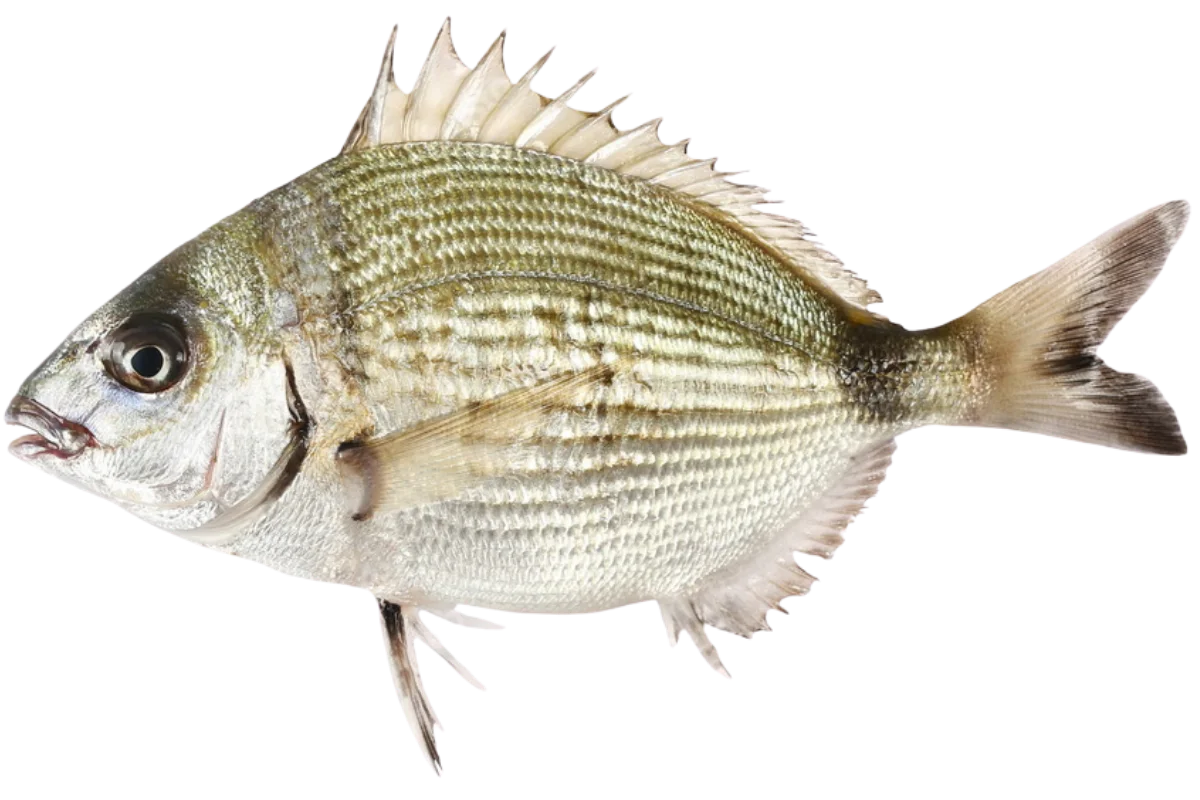
The Annular Seabream, which is also widely known as the Annular Bream or the Annular Gilthead, is the smallest and one of the most charming members of the Sparidae family. It is often called the King of Posidonia because its life is inextricably linked to seagrass meadows. The body is oval and laterally compressed with a colour that varies from silver olive to yellowish or golden, depending on the environment.
The most defining feature for identification, which gave it its scientific name, is the bold black spot located at the base of its tail. This spot resembles a ring that does not close completely at the bottom, which is a detail that distinguishes it from the saddle of the White Seabream. Another unique trait is the intense yellow colour of its pelvic and anal fins, which is not found in the White Seabream.
The Annular Seabream, which is also widely known as the Annular Bream or the Annular Gilthead, is the smallest and one of the most charming members of the Sparidae family. It is often called the King of Posidonia because its life is inextricably linked to seagrass meadows. The body is oval and laterally compressed with a colour that varies from silver olive to yellowish or golden, depending on the environment.
The most defining feature for identification, which gave it its scientific name, is the bold black spot located at the base of its tail. This spot resembles a ring that does not close completely at the bottom, which is a detail that distinguishes it from the saddle of the White Seabream. Another unique trait is the intense yellow colour of its pelvic and anal fins, which is not found in the White Seabream.
It represents the smallest species of its genus. The common length of capture ranges from 10 to 15 centimetres. The maximum length it can reach is 24 centimetres, but such sizes are rare.
The animal is a carnivorous and extremely gluttonous fish. It feeds mainly on small invertebrates that live in the seaweed, such as worms, small crustaceans, gastropods, and echinoderms. Due to its gluttony, it is known to attack any bait that falls into the water immediately.
The Annular Seabream is usually a protandrous hermaphrodite species, although its sexual strategy can vary by region. Most fish mature sexually as males in the first year of their lives when they reach about 9 to 10 centimetres. Later, many of them change sex and become female. Reproduction takes place in the spring, usually from February to May, while the eggs are pelagic.
It is one of the easiest catches for beginners and children because it bites readily on rods from the shore and handlines. It is also caught with set nets and traps. Although it has low commercial value due to its size and many small bones, the meat is extremely delicious, sweet, and tasty. Many consider it sweeter than the meat of the White Seabream. It is ideal for frying or for adding flavour to fish soup.
The International Union for Conservation of Nature classifies the Annular Seabream as a species of Least Concern. Scientific studies have highlighted its importance as an indicator of the health of Posidonia meadows. Furthermore, research showed that it has complex social behaviour and that sex change is not mandatory for all individuals because some fish remain the same sex throughout their lives.
| Country | Local Name |
|---|---|
| 🇮🇹 Italy | Sparaglione |
| 🇪🇸 Spain | Esparrall |
| 🇫🇷 France | Sparaillon |
| 🇹🇷 Turkey | Ispari |
| 🇲🇹 Malta | Sparlu |
| 🌍 North Africa (Tunisia/Libya/Egypt) | Sparaillon or Samak al sparos |
| 🌊 Adriatic Coast (Croatia/Slovenia) | Špar |
| 🇬🇷 Greece | Sparos |