
Pagellus acarne
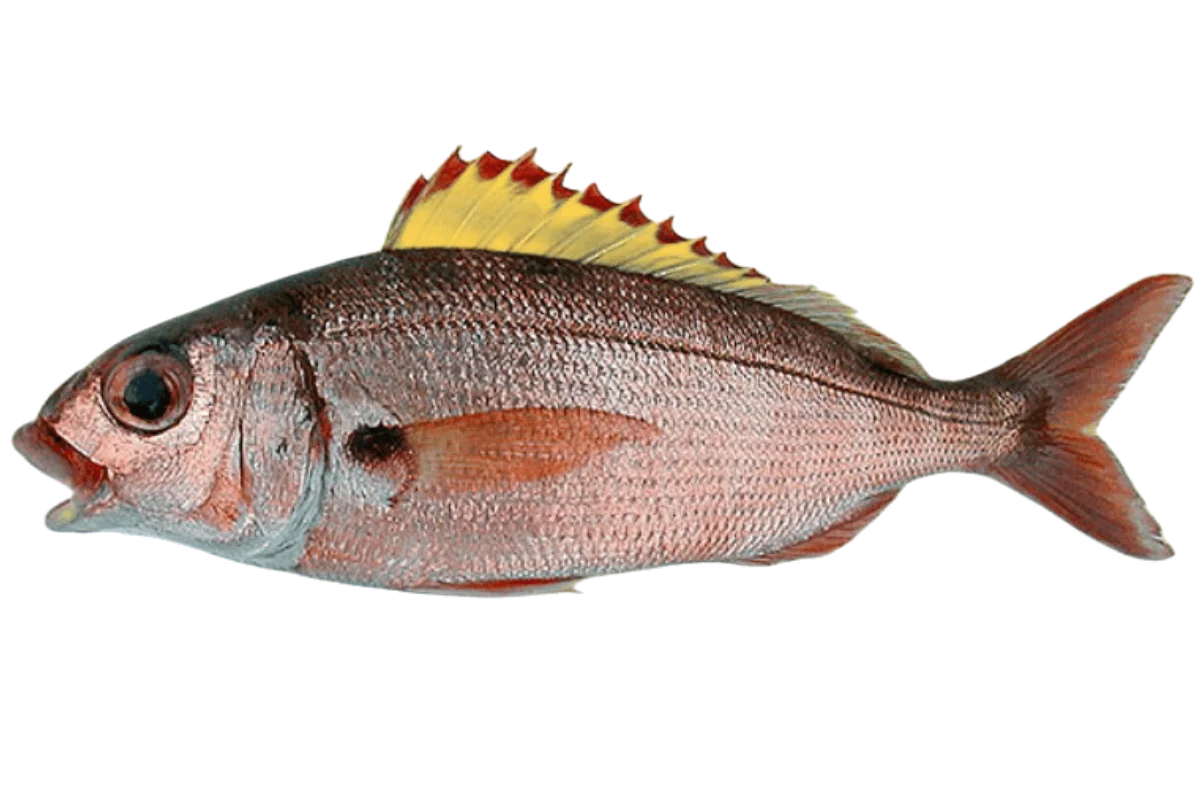
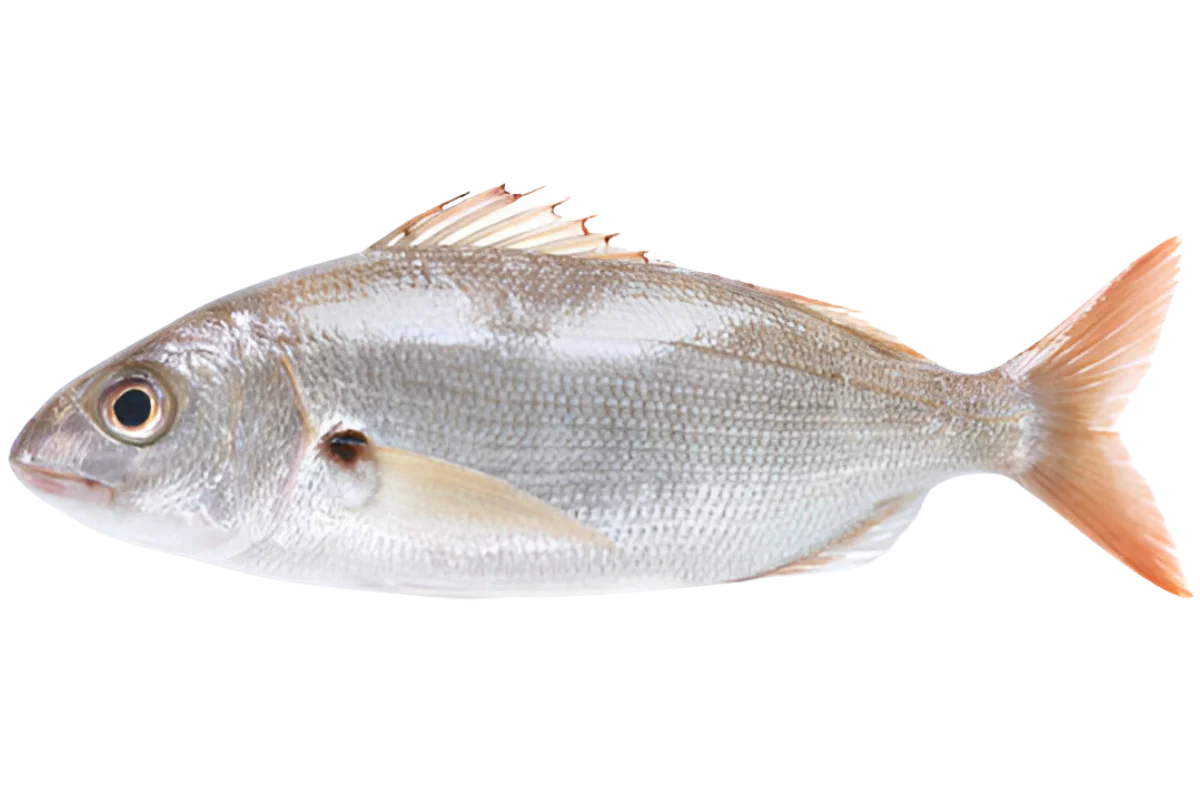
The Axillary Seabream is a medium-sized fish belonging to the Sparidae family, and it is a close relative of the Common Pandora. The body is spindle-shaped and compressed laterally, with a colour that varies from greyish pink on the back to silver on the sides. It is less intensely coloured compared to the Common Pandora.
The defining characteristic for identification is a bold dark red or black spot located exactly at the base of the pectoral fins. This mark distinguishes it from related species such as the Common Pandora, which has a reddish edge on the gill cover, and the Blackspot Seabream, which has a large black spot at the beginning of the lateral line behind the head. Additionally, the interior of its mouth is orange-red.
This is a benthopelagic species that lives near the seabed but also moves in midwaters. It is found in a variety of substrates, such as sand and mud, and Posidonia seagrass meadows. The depth at which it lives ranges from shallow waters of 20 metres to 500 metres. Young individuals prefer shallow coastal waters, while they move to greater depths, usually below 100 metres, as they reach adulthood.
It is generally smaller than the Common Pandora and the Blackspot Seabream. The common length of capture ranges from 15 to 25 centimetres. The maximum length it can reach is 36 centimetres, although such sizes are rare.
It is an omnivorous fish with a preference for a carnivorous diet. Its diet consists mainly of worms, molluscs, and small crustaceans found on the seabed. Adult individuals can also feed on small fish or echinoderms.
The Axillary Seabream exhibits an interesting reproductive strategy that is the opposite of the Common Pandora. It is a protandrous hermaphrodite species. This means that fish are initially born and mature as males. Later in their lives, usually when they reach 17 to 29 centimetres in length at 2 to 7 years of age, they change sex and become females. Breeding takes place primarily in the autumn and winter, depending on the Mediterranean region.
It represents an important commercial catch in the Mediterranean. It is caught mainly with bottom trawls, longlines, and nets. Although its commercial value is lower than that of the Common Pandora or the Gilt head Bream, the meat is tasty and of high quality. It is sold fresh or frozen and is usually prepared fried or grilled.
The International Union for Conservation of Nature classifies the Axillary Seabream as a species of Least Concern due to its wide distribution. However, studies have shown that certain local populations face pressure from fishing. Scientific research has confirmed the importance of water temperature for the development of young individuals and has mapped their migrations from shallow to deep waters during their life cycle.
| Country | Local Name |
|---|---|
| 🇮🇹 Italy | Pagello bastardo |
| 🇪🇸 Spain | Aligote |
| 🇫🇷 France | Pageot acarné |
| 🇹🇷 Turkey | Yabani mercan |
| 🇲🇹 Malta | Paġell b’makkja sewda |
| 🌍 North Africa (Tunisia/Libya/Egypt) | Besbess or Pageot |
| 🌊 Adriatic Coast (Croatia/Slovenia) | Batoglavac |
| 🇬🇷 Greece | Mousmouli or Fatsoukli |