
Helicolenus dactylopterus
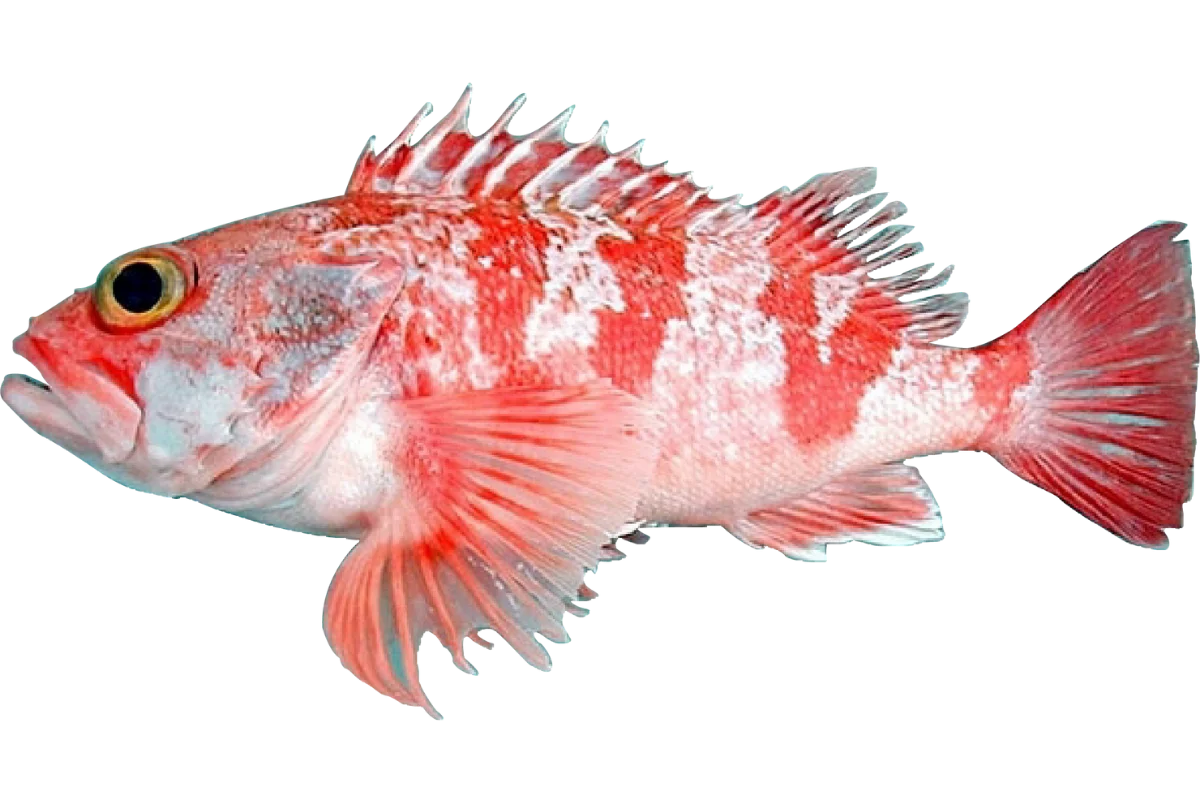
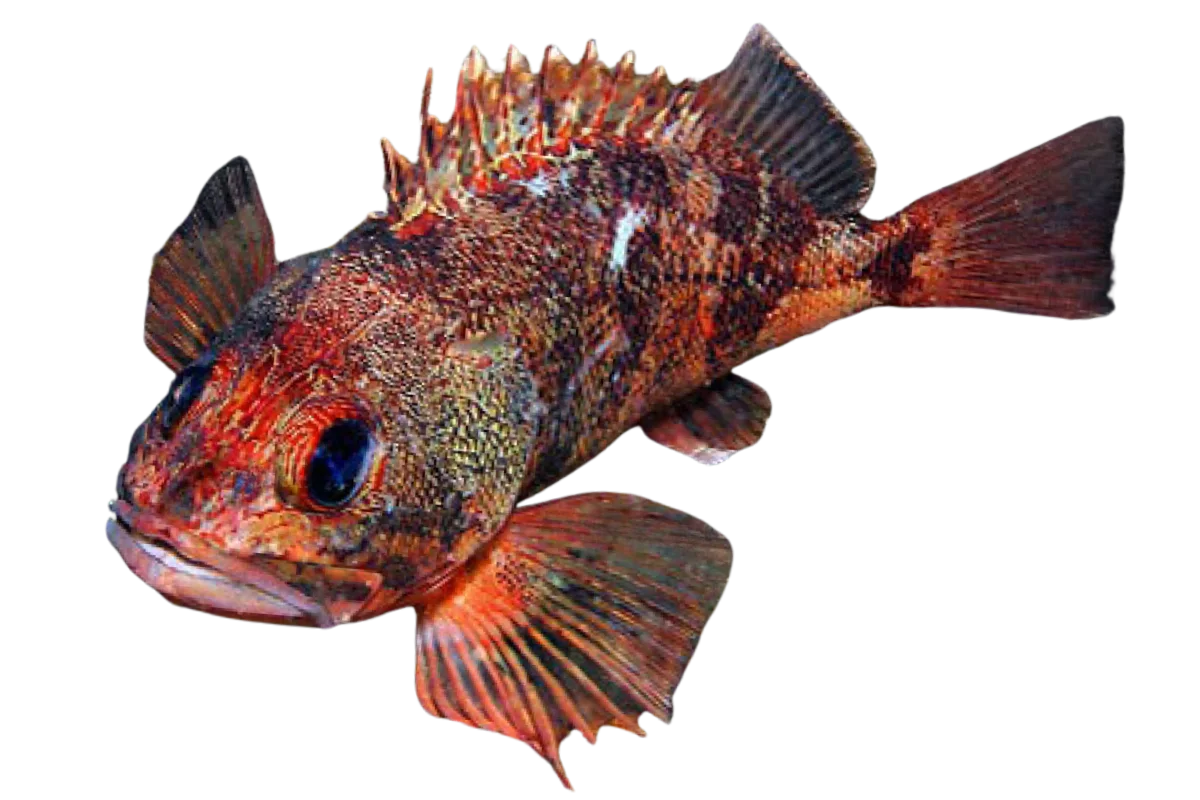
The Blackbelly Rosefish possesses strong and sharp spines on the dorsal fin and on the gill covers, which are connected to venom glands. The sting is extremely painful, and it can cause swelling and inflammation. Great care is required when removing the fish from hooks or nets to avoid injury.
The Blackbelly Rosefish is an impressive deep-sea benthic fish. It resembles the Red Scorpionfish, but differs significantly. The body is robust, with a large head and massive eyes adapted to see in the depths' darkness. The colour is an intense red on the back, fading to pink and white on the belly, and it often has dark vertical bands on the sides. The main feature that distinguishes it from the scorpionfish is that the Blackbelly Rosefish has smoother skin without the many fleshy tassels and skin appendages found on the head and jaw of the scorpionfish. Also, the interior of its mouth and belly is black, which gives the fish its English name.
This is a strictly deep-sea species that lives on the edge of the continental shelf and the slope. It prefers muddy and sandy seabeds at depths that usually range from 200 to 1000 metres, although young individuals may be found in shallower waters. Unlike the solitary scorpionfish that stays motionless on rocks, this species often forms loose schools that move close to the bottom.
The usual length is 20 to 30 centimetres. However, it is a slow-growing fish, reaching a maximum length of 45 to 50 centimetres and a weight of 1.5 kilograms. Larger individuals tend to live at greater depths.
It is a bottom predator that uses ambush techniques. It feeds primarily on benthic invertebrates such as shrimp and crabs, small cephalopods, and small deep-sea fish like silverheads and blue whiting, as well as glowing gelatinous organisms known as pyrosomes, which are abundant in the depths where it lives.
Fisheries & Economic Value
It is caught almost exclusively at great depths by professional vessels with deep longlines and trawlers. It is also a favourite catch for recreational anglers who practice deep handline fishing. It has high commercial value because the meat is white and delicious and has few bones. The texture is similar to the scorpionfish, but it is a little firmer. It is ideal for fish soup and for grilling.
The International Union for Conservation of Nature classifies the species as Least Concern. However, scientific studies highlight that it is vulnerable to overfishing due to its biological characteristics. It lives for many years, with a recorded age of 43, and grows very slowly, reaching sexual maturity at an older age. This means that populations need a lot of time to recover if they are reduced.
| Country | Local Name |
|---|---|
| 🇮🇹 Italy | Scorfano di fondale |
| 🇪🇸 Spain | Gallineta or Rascacio rubio |
| 🇫🇷 France | Sébaste chèvre or Chèvre de mer |
| 🇹🇷 Turkey | Derinsu iskorpiti |
| 🇲🇹 Malta | Skorfna tal-fond |
| 🌍 North Africa (Tunisia/Libya/Egypt) | Chèvre or Sebaste |
| 🌊 Adriatic Coast (Croatia/Slovenia) | Bodečnjak mali |
| 🇬🇷 Greece | Kokkinopsaro or Sevastos |