
Serranus cabrilla
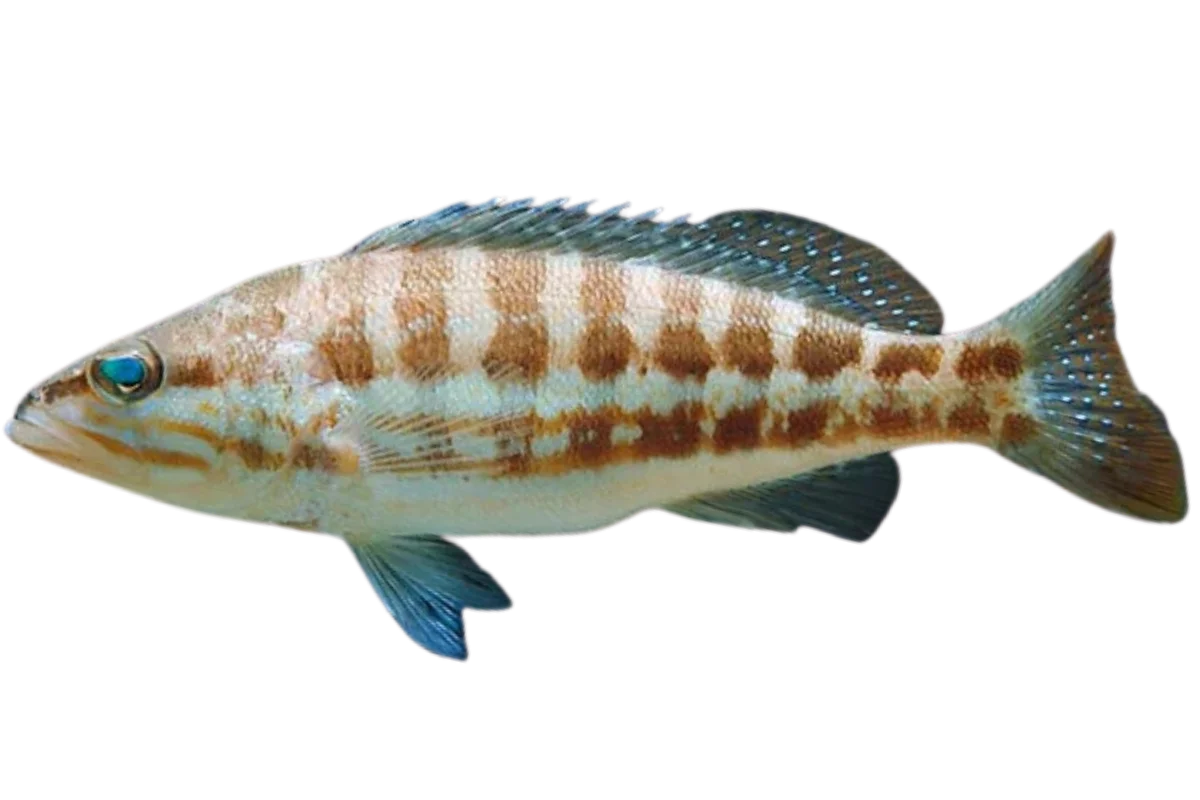
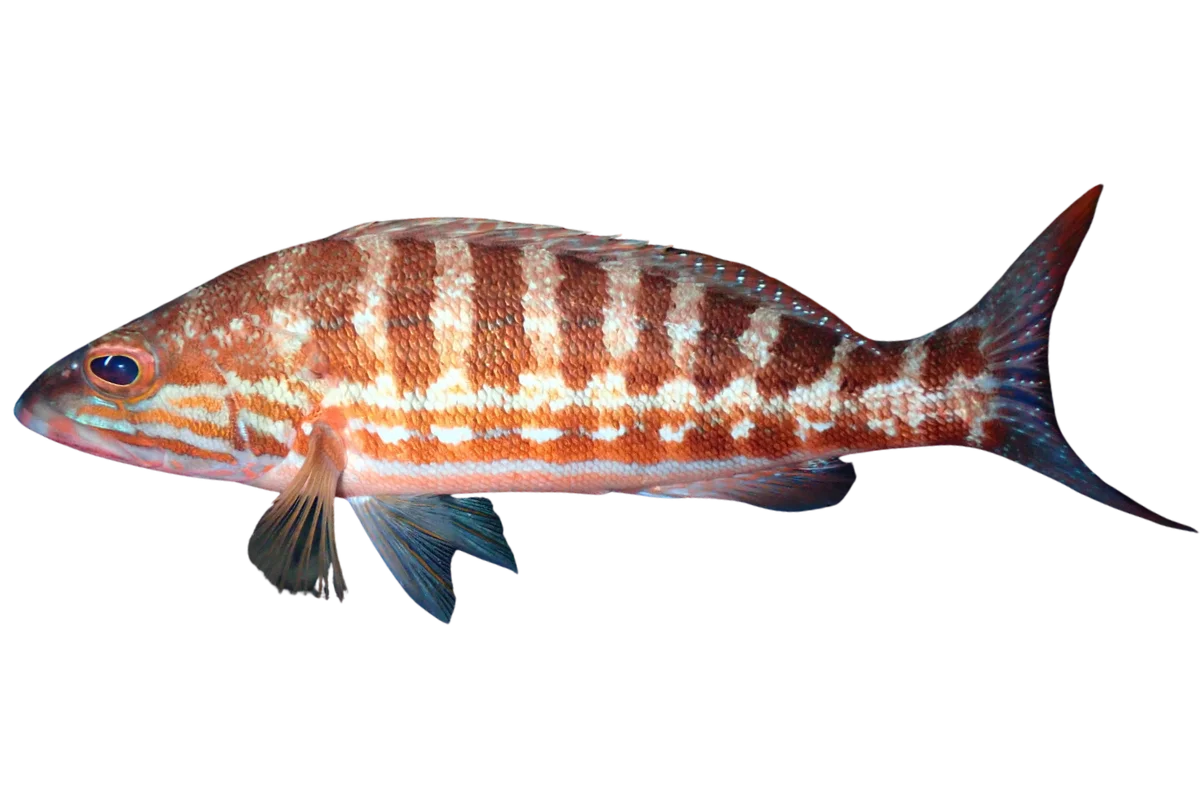
The Comber, which is also widely known as the Gaper, is one of the most common, gluttonous, and adaptable fish of the regional seabeds. It belongs to the Serranidae family and is a cousin of the groupers and the painted Comber. The body is elongated and slightly compressed, with colour that varies significantly with depth and environment, usually ranging from reddish-brown to yellow-orange. Its characteristic feature consists of the seven to nine vertical dark stripes on its sides, which are interrupted by two or three light coloured horizontal lines running along the body.
It is often confused with the Painted Comber and the Brown Comber, but the differences remain clear. The Comber has horizontal lines that intersect the vertical ones, and it lacks the blue labyrinth pattern on its head. The Painted Comber has the characteristic blue pattern on the head and a blue spot on the belly. The Brown Comber is much smaller and rounder, with a bold black spot on the dorsal fin.
This represents the most adaptable benthic species of the Mediterranean. It lives literally everywhere on rocky bottoms, in Posidonia seagrass meadows, on sandy areas, and on muddy seabeds. The depth range in which it occurs is impressive, ranging from shallow waters of 5 metres to 500 metres. It is a solitary and territorial fish.
The Comber is a small to medium-sized fish. The usual length of capture ranges from 15 to 25 centimetres. However, in deep waters and untouched areas, it can reach a maximum length of 40 centimetres and attain a relatively large volume.
The animal is a voracious, opportunistic predator that feeds at any time of day. Its diet is extremely varied and includes fish and crustaceans such as shrimp and crabs, and small lobsters, along with cephalopods and worms. Due to its gluttony, it attacks with mania any baits intended for much larger fish.
The Comber, like the Painted Comber, is a simultaneous hermaphrodite species. Each individual possesses active testes and ovaries simultaneously. This means that during reproduction, which takes place from April to July, any pair of fish that meets can reproduce by fertilising each other's eggs.
It is one of the most frequent catches for recreational fishers, especially when using handlines, because it bites easily and swallows the hook deep. Professionally, it is caught with trawls, nets, and traps. Although the meat is white, tasty, and ideal for traditional fish soup or frying, it has many bones and is considered of low commercial value.
The International Union for Conservation of Nature classifies the Comber as a species of Least Concern due to its great abundance. Scientific studies have shown that it is an important indicator of seabed biodiversity. Furthermore, research on its behaviour showed that it often follows larger fish, such as red mullets, or octopuses that dig the bottom to grab microorganisms that escape, acting as a smart opportunist.
| Country | Local Name |
|---|---|
| 🇮🇹 Italy | Sciarrano |
| 🇪🇸 Spain | Cabrilla |
| 🇫🇷 France | Serran chevrette |
| 🇹🇷 Turkey | Hani balığı |
| 🇲🇹 Malta | Burkax |
| 🌍 North Africa (Tunisia/Libya/Egypt) | Serran or Samak al chanos |
| 🌊 Adriatic Coast (Croatia/Slovenia) | Kanjac |
| 🇬🇷 Greece | Chanos |