
Epinephelus costae
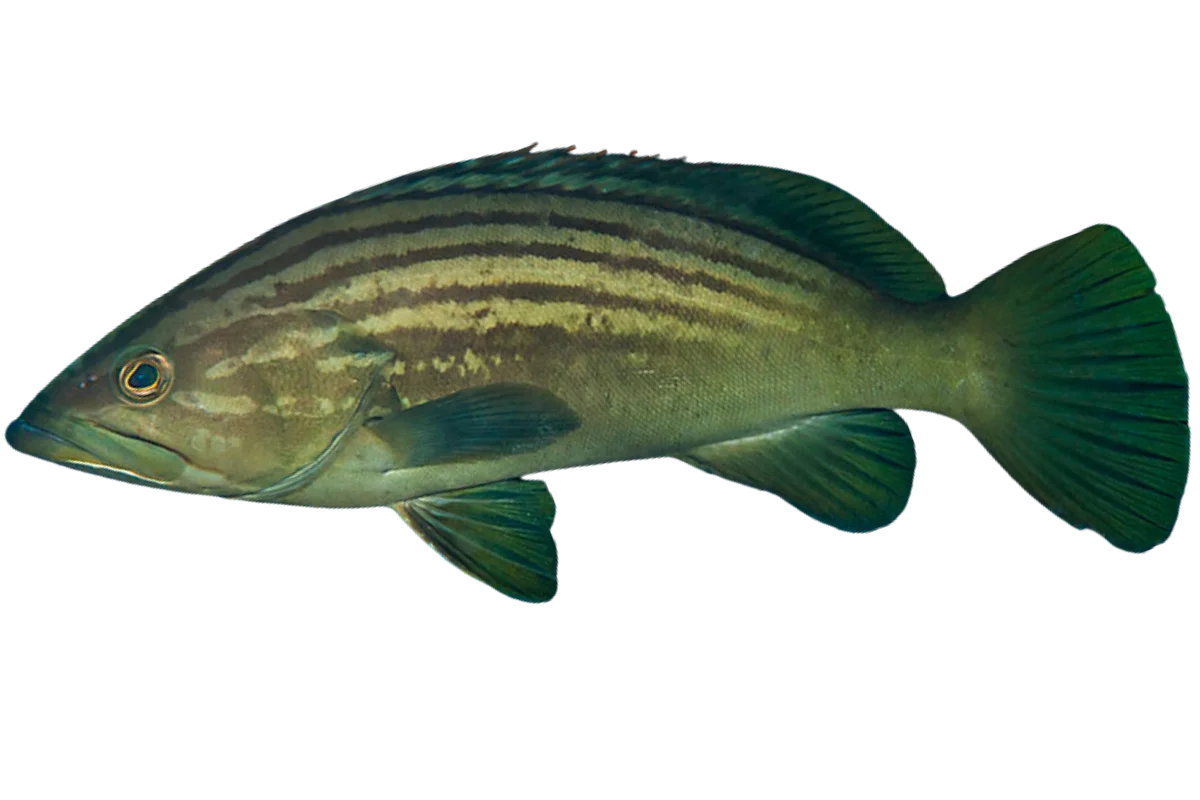
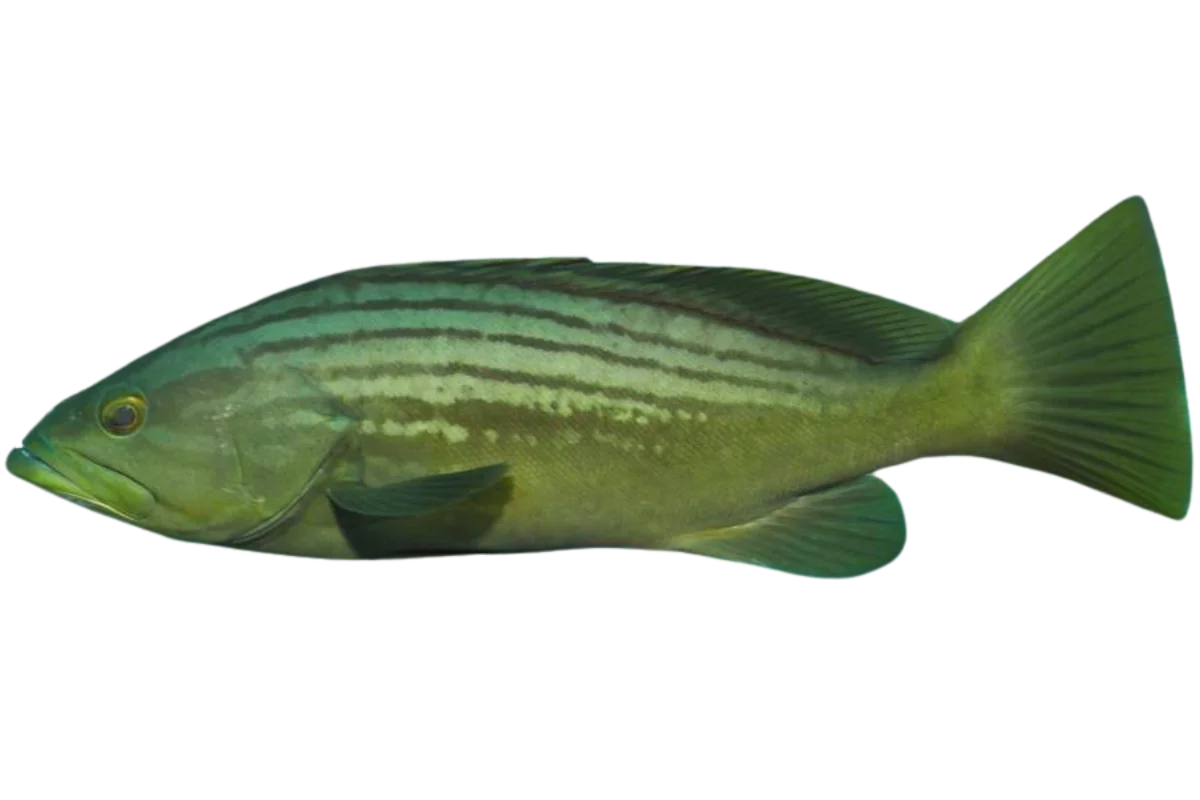
The Goldblotch Grouper, which is also widely known as the Goldblotch Rockfish or simply the Goldblotch, is one of the most elegant and tasty fish of the Serranidae family. It is famous for its hydrodynamic body, characteristic stripes, and the golden spot that decorates its sides. Many consider it the most delicious fish of the family, often surpassing even the Dusky Grouper.
The Goldblotch Grouper stands out easily from its relatives, such as the Dusky Grouper or the Mottled Grouper, thanks to a unique feature, which is a bright golden or yellow spot located high on its sides at the level of the dorsal fin. This spot is a hallmark of the species. Additionally, four to five dark brown horizontal lines run along the length of the body; they are very intense in young fish but tend to fade or disappear in very large adult males. The body is more slender and athletic than that of the Dusky Grouper but more robust than that of the Mottled Grouper. The snout is pointed, and the lower jaw protrudes strongly.
This is a bottom-dwelling species that loves drop-offs. It lives mainly on rocky or mixed seabeds with steep slopes, often near deep waters and reefs. It is encountered usually from 20 to 100 metres, although it descends even deeper. It is more social than the Dusky Grouper and often forms small groups, especially among females.
The Goldblotch Grouper can reach a length of 1 metre, with a maximum recorded length of 140 centimetres and a weight of 15 kilograms. However, most fish caught are between 1 and 5 kilograms with a length of 50 to 70 centimetres.
The animal is a very fast and strong predator. It hunts actively and often in midwaters near the bottom, feeding mainly on fish and cephalopods such as cuttlefish, squid, and octopus, as well as large crustaceans.
The species is a protogynous hermaphrodite. It is born and matures sexually as a female when it reaches a length of around 35 to 40 centimetres. Later in its life, usually when it exceeds 60 centimetres, it changes sex and becomes a male. This means that the large specimens caught are almost always male. Reproduction occurs in the summer.
It represents one of the most sought-after and expensive fish on the market. It is caught mainly with longlines and handlines, as well as bottom trolling and jigging. It is a difficult target for spearfishing because it is very suspicious and moves quickly. It has extremely high commercial value. The meat is white and firm, with a unique flavour, and is considered by many to be superior to that of the Dusky Grouper, while also being ideal for grilling, soups, or as a fillet. The minimum permitted catch size is 45 centimetres.
The International Union for Conservation of Nature classifies the Goldblotch Grouper as Data Deficient globally, but in the Mediterranean, it is considered vulnerable due to overfishing. Scientific studies have shown that, unlike the Dusky Grouper, which is highly territorial, this species has greater mobility and can travel long distances to find food or a mate. Genetic research on populations in the Eastern Mediterranean has shown that they remain healthy despite fishing pressure.
| Country | Local Name |
|---|---|
| 🇮🇹 Italy | Cernia dorata |
| 🇪🇸 Spain | Falso abadejo |
| 🇫🇷 France | Mérou badèche |
| 🇹🇷 Turkey | Lagos |
| 🇲🇹 Malta | Ċerna deheb |
| 🌍 North Africa (Tunisia/Libya/Egypt) | Mérou badèche or Samak al stira |
| 🌊 Adriatic Coast (Croatia/Slovenia) | Kirnja duga |
| 🇬🇷 Greece | Stira |