
Pempheris vanicolensis
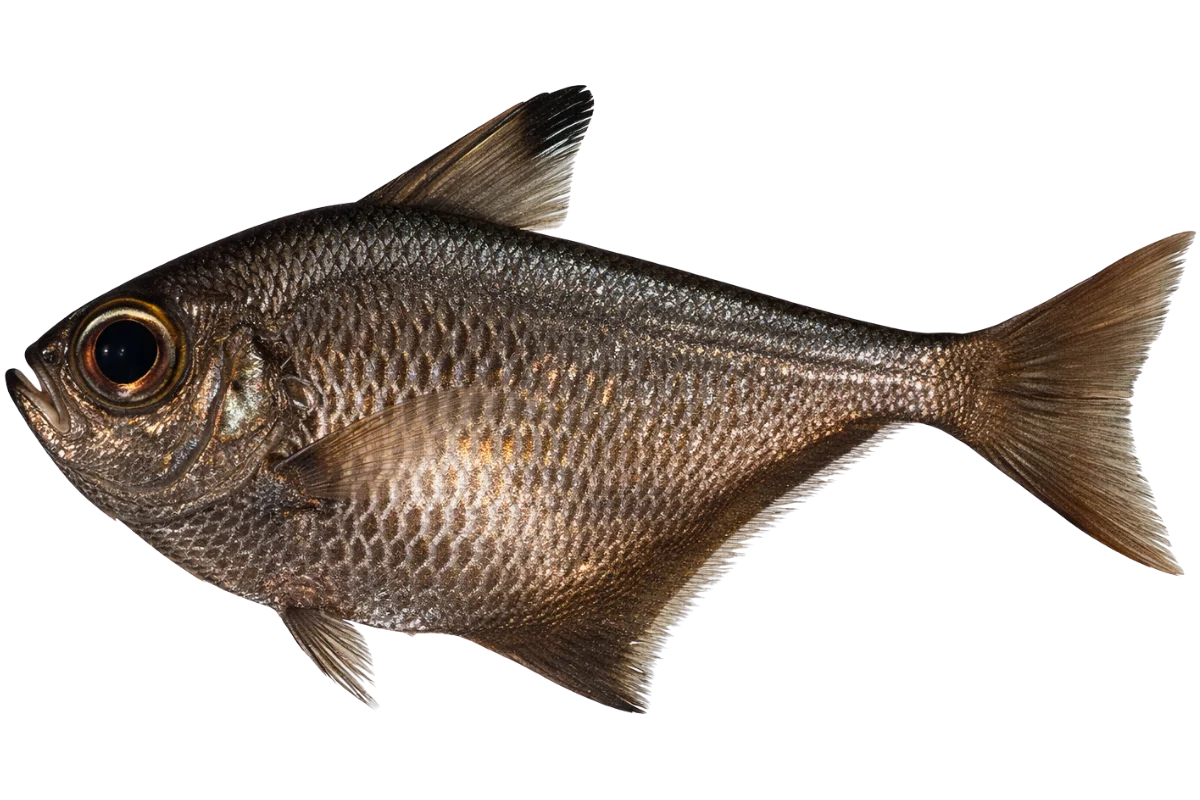
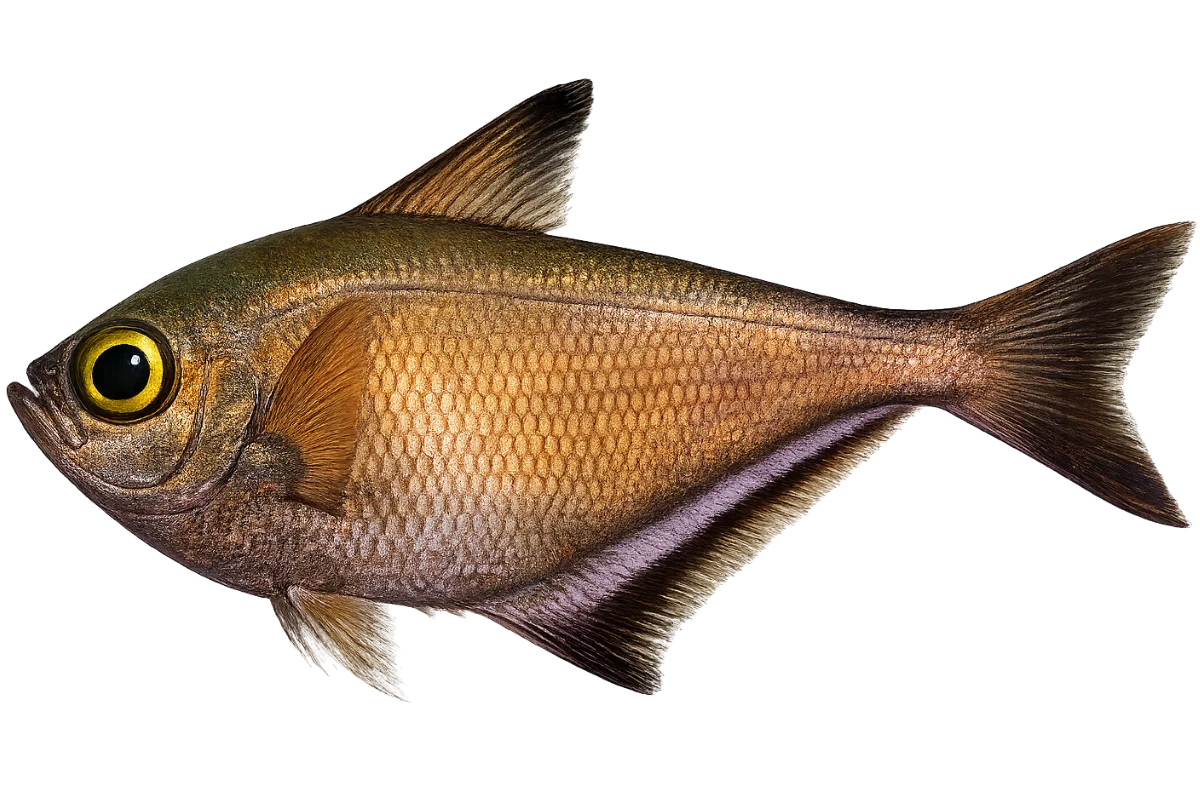
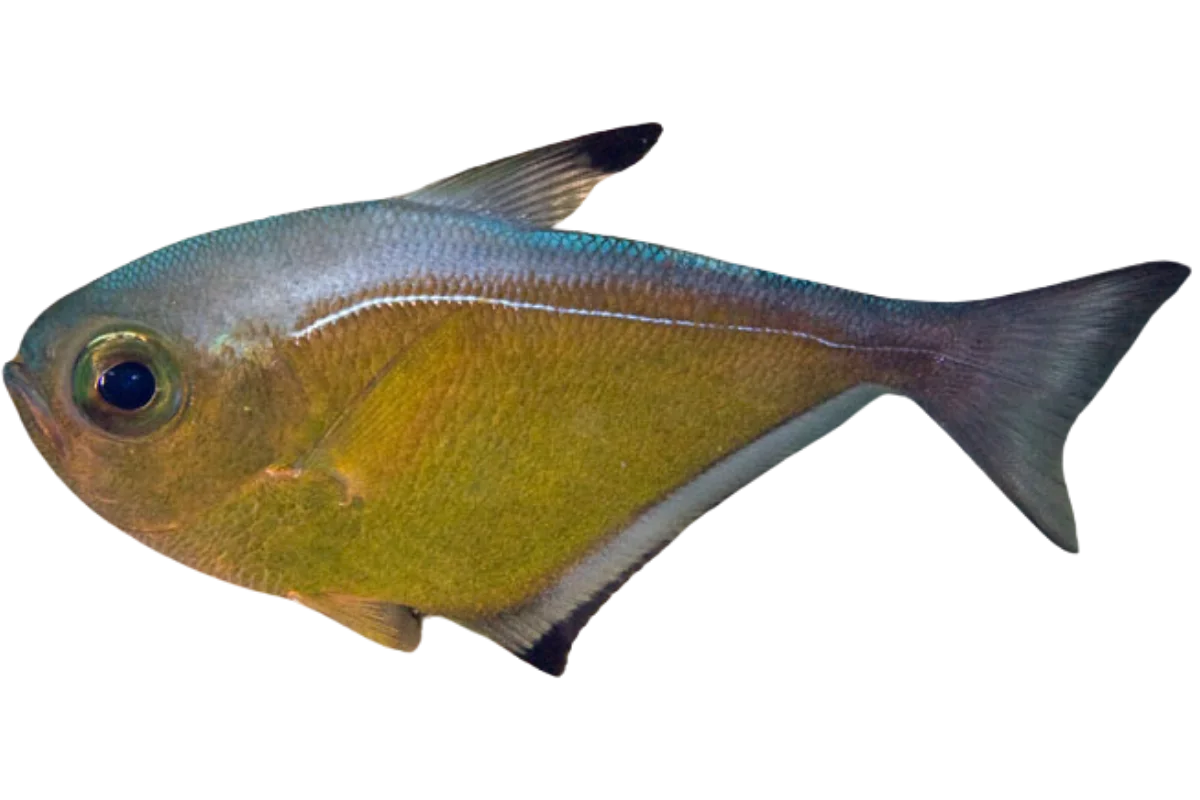
The Vanikoro Sweeper, commonly referred to simply as the Sweeper, is a small and strange fish that has flooded the shallow, rocky coasts of the Eastern Mediterranean in recent years. It represents a classic Lessepsian migrant that arrived from the Red Sea through the Suez Canal and established itself permanently in regional waters. It belongs to the Pempheridae family, whose members are known internationally as sweepers. Its local nickname is an affectionate term derived from its facial expression. If one observes it from the front, the fish has a very characteristic, almost comical or human expression, due to its short snout and the huge eyes that dominate the head.
The body is very short and high, and strongly compressed laterally, taking the shape of a disc or a leaf. The colour is usually bronze, brown, or pinkish copper with silver reflections on the sides. Its most impressive feature consists of its huge, round eyes, which usually have an intense yellow colour. These eyes represent an adaptation for night vision because the species is strictly nocturnal. It also possesses a very short dorsal fin and a very long anal fin that runs along its belly and has a dark edge.
It lives in shallow coastal waters with rocky bottoms, usually at depths of 1 to 30 metres. It is a fish that avoids daylight. During the day, it forms dense, populous schools that hide deep within dark caves, large rock crevices, and under ledges. As soon as night falls, the schools emerge from their hiding places and disperse in the water column to feed.
It represents a small fish. The usual length ranges from 10 to 12 centimetres. The maximum length it can reach is 18 to 20 centimetres, although such sizes are rare in regional seas.
The animal is a nocturnal plankton eater. It feeds mainly on zooplankton, such as invertebrate larvae and copepods, which rise to the surface during the night. The anatomy of its mouth, which is turned upwards, helps it to capture its prey from below.
Reproduction takes place during the warm months of the year. In the Mediterranean, this period extends primarily from April to September, when water temperatures are favourable.
It has no commercial value and is not sold in fish markets. However, it is often caught as unwanted bycatch in static nets set near rocks. Due to its compressed, thorny shape, it gets tangled easily in nets and is extremely difficult and time-consuming to remove, causing damage to equipment and frustration for fishers. Although the meat is edible and usually fried, it has many bones and little flesh, so it is usually discarded or used as bait for traps.
The International Union for Conservation of Nature has not yet fully assessed the species' impact on the Mediterranean. However, scientific studies have shown that the Vanikoro Sweeper directly competes with indigenous nocturnal species, specifically the Cardinalfish. Since both species prefer the same caves to hide during the day, it has been observed that large schools of the invasive fish often displace the Cardinalfish from their shelters while forcing them to move to less protected areas or deeper waters.
| Country | Local Name |
|---|---|
| 🇮🇹 Italy | Pesce spazzino |
| 🇪🇸 Spain | Pemferis de Vanikoro |
| 🇫🇷 France | Poisson balaisseur |
| 🇹🇷 Turkey | Süpürge balığı |
| 🇮🇱 Israel | Vanikoro Sweeper |
| 🇲🇹 Malta | Sweeper |
| 🌍 North Africa (Tunisia/Libya/Egypt) | Samak al fatsoui or Balaisseur |
| 🇬🇷 Greece | Fatsoui |