
Hexanchus griseus
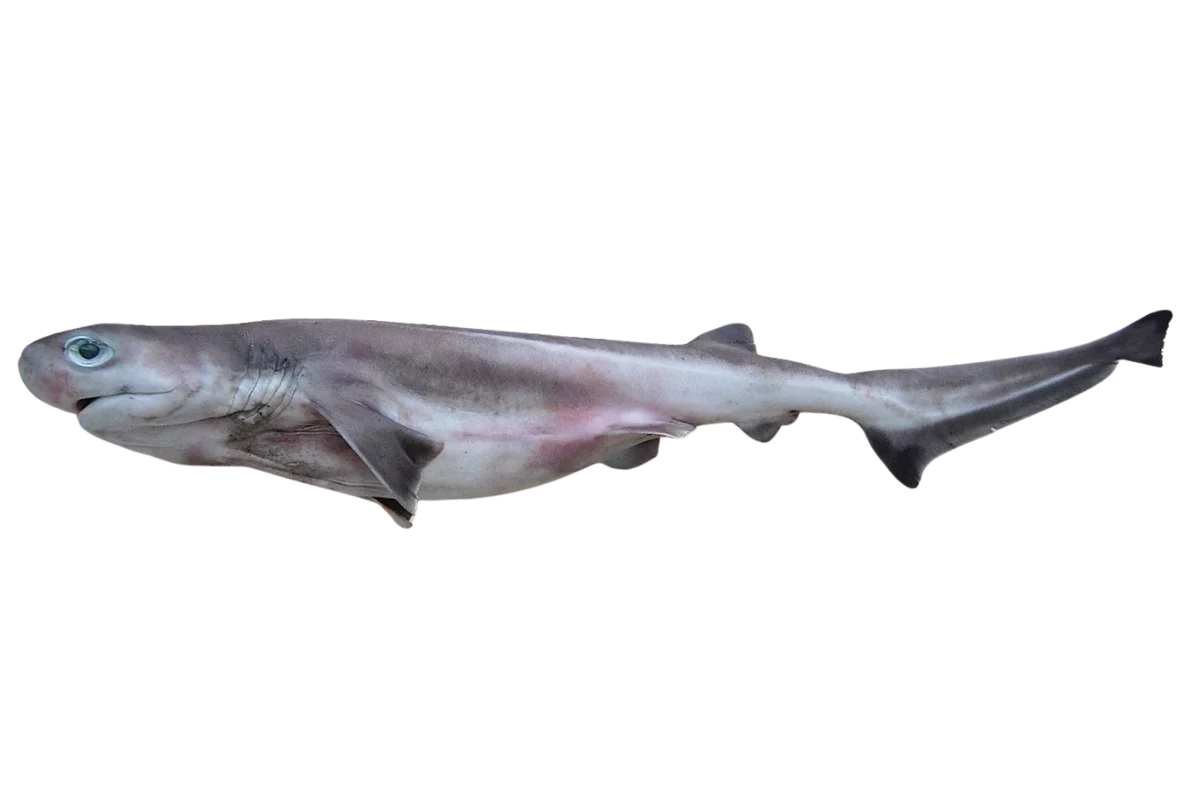
The Bluntnose Sixgill Shark is a true living fossil of the seas. It is a very primitive shark that has retained characteristics that its ancestors possessed millions of years ago. Its most important and distinctive feature, which gives the animal its name, is the presence of six pairs of gill slits on each side of the head. This contrasts with most modern sharks that possess only five gill slits.
The body is heavy and bulky, with grey or brown colouration on the back and a lighter underside. Another special feature is the single dorsal fin, which is positioned very far back near the tail. The eyes are large and have a characteristic fluorescent green colour when the animal is alive because they are adapted to see in the darkness of the abyss.
It is a resident of deep waters. It lives primarily on the continental slope and in the abyss at depths that usually range from 200 to 1100 metres. Records show it can exist as deep as 2500 metres. During the day, it remains in the dark depths, while it often rises to shallower waters at night to feed.
This is one of the largest predatory sharks in the world. The length often reaches 3 to 4 metres, but it can exceed 5 metres. The weight of large individuals can reach or exceed half a tonne, which is approximately 500 to 600 kilograms.
This shark is an apex but opportunistic predator. It feeds on a wide variety of prey, including other fish, rays, smaller sharks, squid, and crabs. It also functions as a scavenger of the seabed because it often feeds on dead animals that fall from the surface.
It is an ovoviviparous species with impressive fertility. The embryos hatch inside the mother's body. Pregnancy probably lasts for more than two years. The female gives birth to a large number of young, ranging from 20 to over 100 pups per litter. The young are born with a length of approximately 60 to 70 centimetres.
It is not targeted for fishing in the Mediterranean but is occasionally caught as bycatch on deep longlines and trawls. Commercial value is limited. In the past, its liver was considered valuable for its oil.
The International Union for Conservation of Nature classifies the shark globally as Near Threatened. Although populations appear relatively stable due to their inaccessible environment, the slow growth and long gestation period make them vulnerable to pressure. Research has shown that large females tend to live in shallower waters compared to males and young individuals.
| Country | Local Name |
|---|---|
| 🇮🇹 Italy | Capopiatto |
| 🇪🇸 Spain | Cañabota gris |
| 🇫🇷 France | Griset |
| 🇹🇷 Turkey | Boz camgöz |
| 🇲🇹 Malta | Gabdoll |
| 🏴 | Kalb bhar |
| 🏴 | Pas glavonja |
| 🇬🇷 Greece | Exakarcharias, Grizos Notidanos, or Aletri |