nn
.webp)

nn
Oxynotus centrina
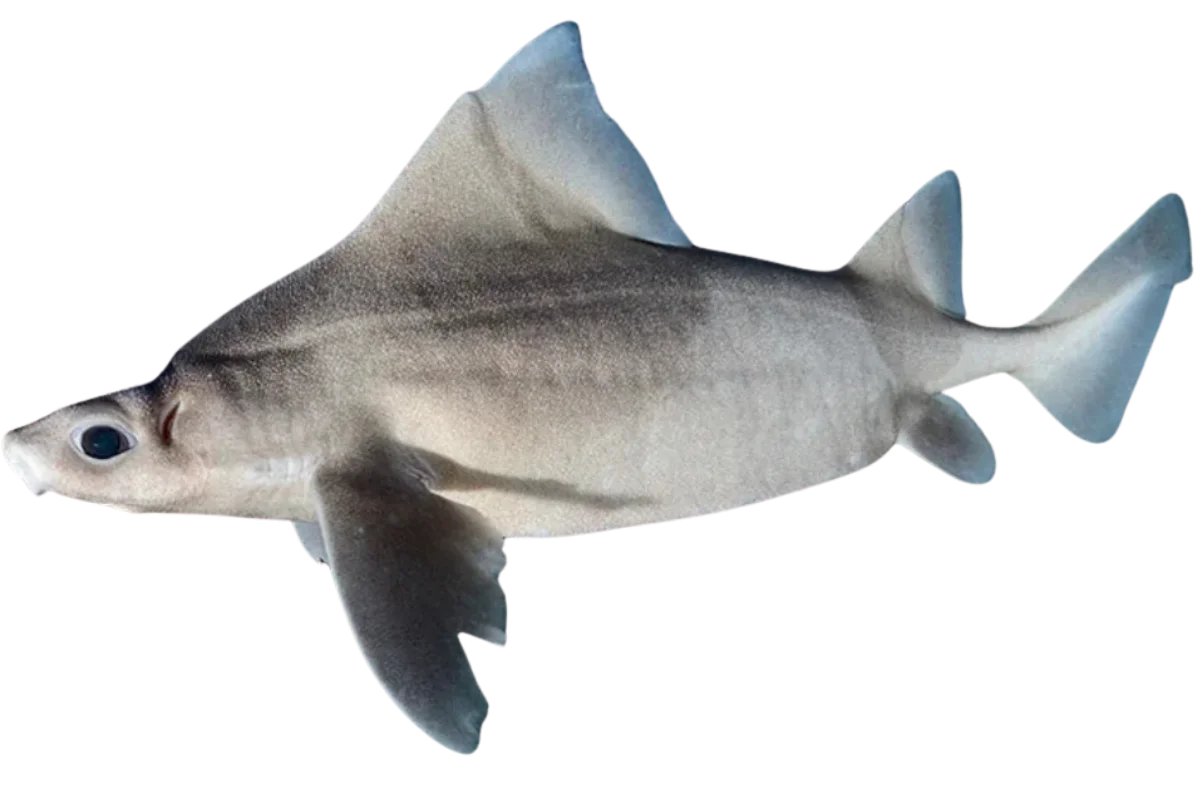
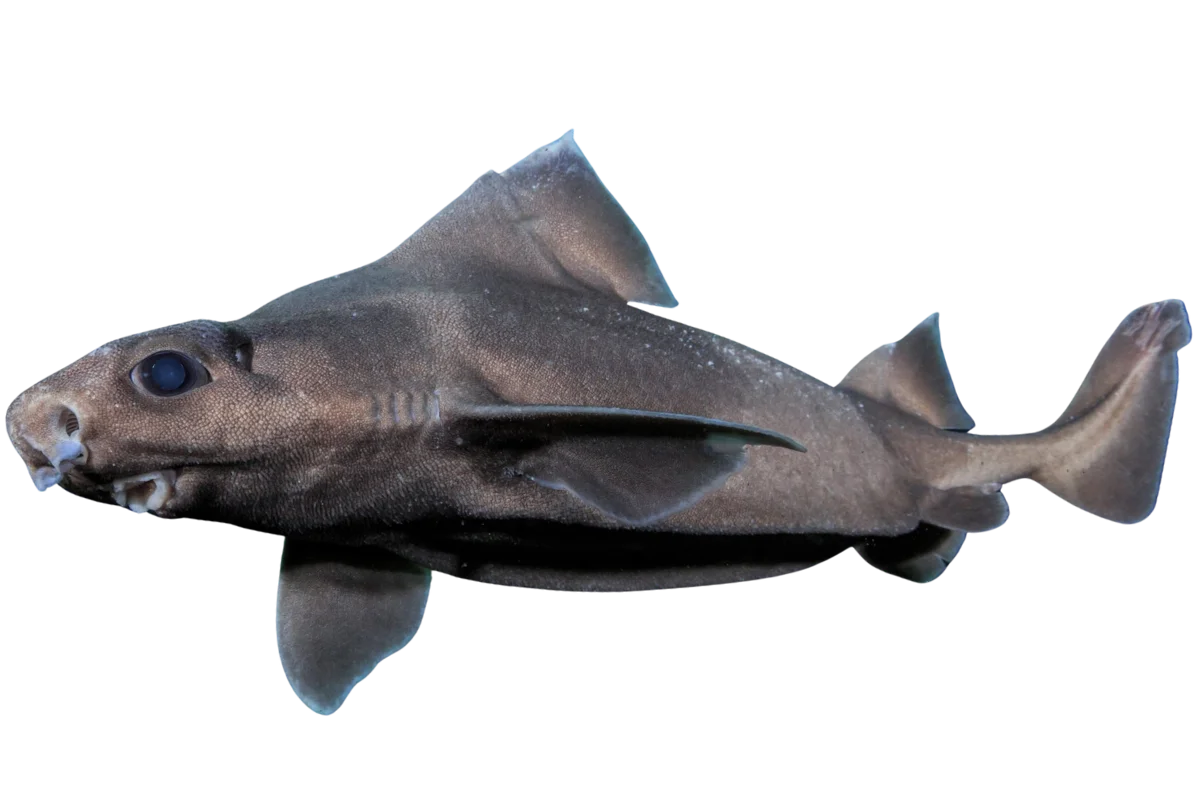
The Angular Roughshark, which is also known as the Flatiron Shark, the Hogfish, or the Humantin, is undoubtedly the most bizarre and unique shark living in the deep waters of the Mediterranean. It belongs to the Oxynotidae family, and its appearance does not resemble that of typical sharks at all. The body is exceptionally high and short with a triangular transverse section that gives the impression of being compressed from the sides. Its skin is extremely rough, covered with large, hard dermal denticles, which have earned it the nickname "Urchin Cat".
The most characteristic feature consists of two large dorsal fins that resemble sails or humps, each carrying a strong, protruding spine. The head is small and flattened with a snout that resembles a pig's and large nostrils. This leads to the common regional names of Pig Shark or Pigfish. While it is sometimes confused by name with the Spiny Dogfish, it is completely different in morphology.
It is a benthic shark that lives and moves slowly near the seabed. It prefers the deep waters of the continental shelf and the slope, usually at depths from 60 to 660 metres. It is found mainly on muddy or sandy bottoms, where it can search for food, and in areas with coralligenous formations.
This is a small-to-medium shark. The common length of capture ranges from 50 to 70 centimetres. The maximum length it can reach is approximately 1.5 metres, although individuals over one metre are rare.
Due to its clumsy body, the Angular Roughshark is not an active hunter but feeds mainly on small, slow bottom-dwelling organisms. Its diet consists mainly of polychaete marine worms, sipunculid worms, and small crustaceans. Furthermore, recent research has shown that it also feeds on the eggs of other sharks and rays through oophagy, sucking them out of their capsules with its specially shaped mouth.
The species is ovoviviparous. The embryos develop in the mother's uterus while feeding from the yolk sac. Reproduction seems to take place during the winter months or early spring. The female usually gives birth to between 10 and 12 young, with a range of 7 to 23, and they are born measuring 20 to 25 centimetres, faithful copies of their parents.
It has no commercial value and is not consumed by humans because the meat is considered low quality. It is caught exclusively as bycatch by bottom trawlers and longlines operating at great depths. It is usually discarded at sea, but unfortunately, its survival rate after capture is low. In the past, its rough skin was used for polishing wooden objects.
The International Union for Conservation of Nature classifies the Angular Roughshark as Critically Endangered in the Mediterranean and Vulnerable globally. Its populations have decreased dramatically due to intensive trawling at the depths where it lives. Scientific studies have shown that when it is removed from the water, it produces a characteristic sound, like a grunt, likely due to the violent expulsion of air and water. Furthermore, research observed that it possesses extremely large spiracles behind the eyes, which help it breathe while it remains motionless on the bottom.
| Country | Local Name |
|---|---|
| 🇮🇹 Italy | Pesce porco |
| 🇪🇸 Spain | Cerdo marino |
| 🇫🇷 France | Centrine commune |
| 🇹🇷 Turkey | Domuz balığı |
| 🇲🇹 Malta | Fenestrun |
| 🌍 North Africa (Tunisia/Libya/Egypt) | Samak al khinzir or Centrine |
| 🌊 Adriatic Coast (Croatia/Slovenia) | Pas prasac |
| 🇬🇷 Greece | Oxynotos or Achinogatos |