
Epinephelus aeneus
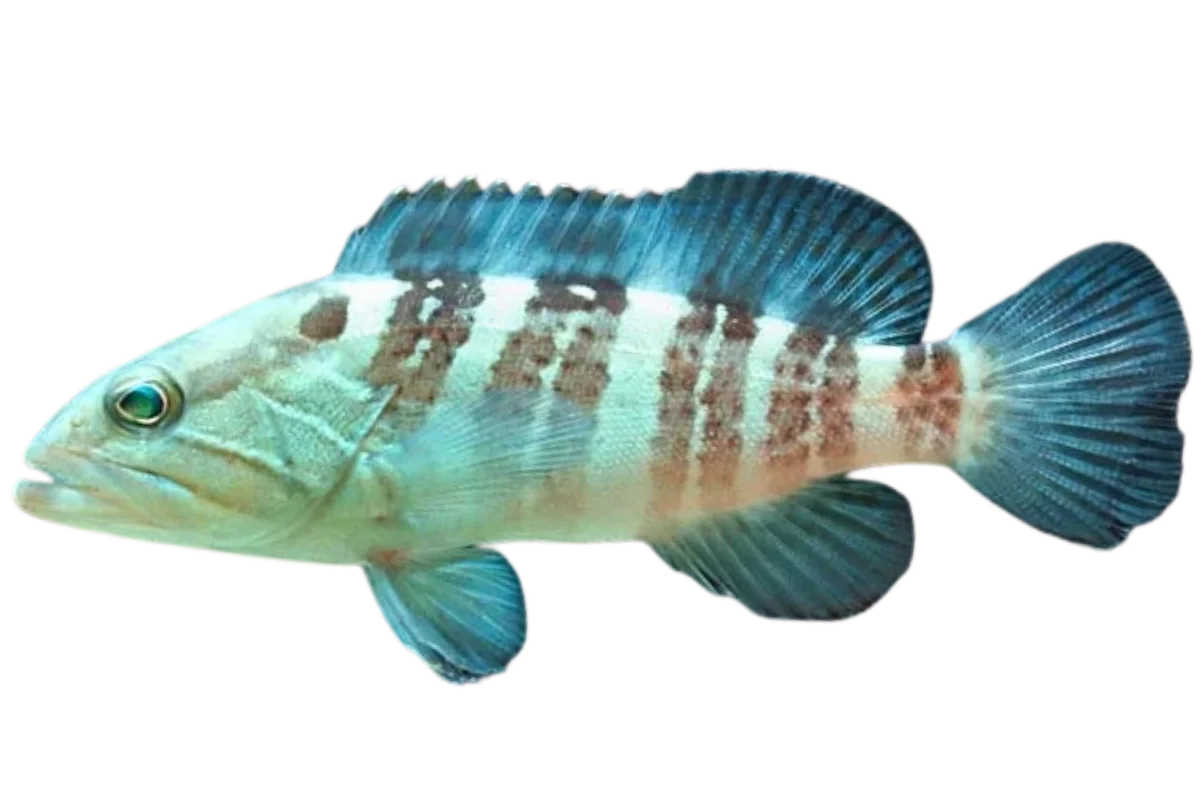
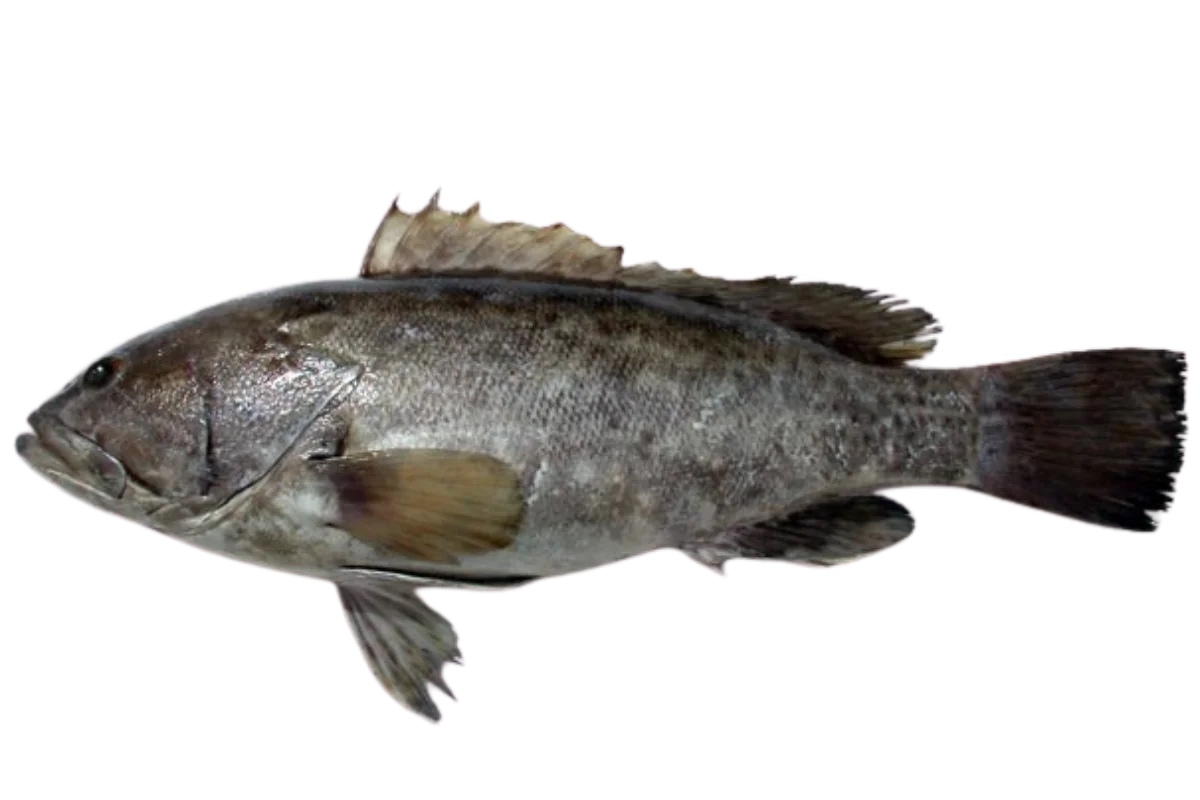
The White Grouper, also known as the White Rockfish or Bronze Grouper, is one of the most sought-after and delicious fish in the Serranidae family. It is famous for its delicate white meat, which many gourmets consider superior even to that of the Dusky Grouper. At the same time, it is also noted for its unique behaviour on the seabed. The body is elongated and more slender than that of the bulky Dusky Grouper, with a colour that ranges from greenish grey to olive or bronze.
The key to distinguishing it from its relative, the Mottled Grouper, is found on the head. The White Grouper has three or four characteristic white or light-coloured lines on the cheek that radiate behind the eye like a star. Furthermore, young individuals often bear faint vertical white stripes on their sides, which tend to disappear as the fish grows larger.
This is a benthic species that lives at depths from 20 to 200 metres. In contrast to the Dusky Grouper, which loves rocks, the White Grouper prefers soft bottoms such as sandy or muddy areas and mixed seabeds with gravel near Posidonia seagrass meadows. It is famous as the architect of the seabed because it has the unique habit of digging its own burrow under individual ledges or roots within the sand. It moves materials with its mouth to create the perfect shelter from which it rarely wanders away.
The White Grouper is a large fish. The usual length of capture ranges from 50 to 70 centimetres, and the weight from 2 to 5 kilograms. However, it can reach a maximum length of 120 centimetres and a weight that approaches 25 kilograms.
The White Grouper is a large fish. The usual length of capture ranges from 50 to 70 centimetres, and the weight from 2 to 5 kilograms. However, it can reach a maximum length of 120 centimetres and a weight that approaches 25 kilograms.
The White Grouper is a protogynous hermaphrodite species. All fish are born as females and mature sexually at the age of five to seven years when they reach about 50 to 60 centimetres in length and 3 kilograms in weight. Later in their lives, usually when they exceed 9 kilograms at ages 10 to 13, they change sex and become males. Reproduction occurs during the warm months of spring and summer, when the fish migrate to specific spawning areas.
It holds one of the highest positions in the fish market due to the exceptional quality of its meat, which is ranked as Class A. It is caught professionally mainly with thick-bottom longlines and handlines, and less frequently with trawls. For recreational fishers, and especially for underwater spearfishers, it is a difficult target because it is highly suspicious and quickly disappears into its turbid nest as soon as it senses danger.
The International Union for Conservation of Nature classifies the White Grouper as Near Threatened globally, while its populations in the Mediterranean are considered overfished. Scientific studies have shown that fishing large, all-male individuals creates a serious problem for reproduction because the number of males required for fertilisation decreases dramatically. For this reason, a strict minimum catch size of 45 centimetres is in effect.
| Country | Local Name |
|---|---|
| 🇮🇹 Italy | Cernia bianca |
| 🇪🇸 Spain | Cherna de ley or Mero blanco |
| 🇫🇷 France | Mérou blanc |
| 🇹🇷 Turkey | Lagos |
| 🇲🇹 Malta | Ċerna bajda |
| 🌍 North Africa (Tunisia/Libya/Egypt) | Mérou blanc or Samak al sfyrida |
| 🌊 Adriatic Coast (Croatia/Slovenia) | Bijela kirnja |
| 🇬🇷 Greece | Sfyrida |