
Sardinella aurita
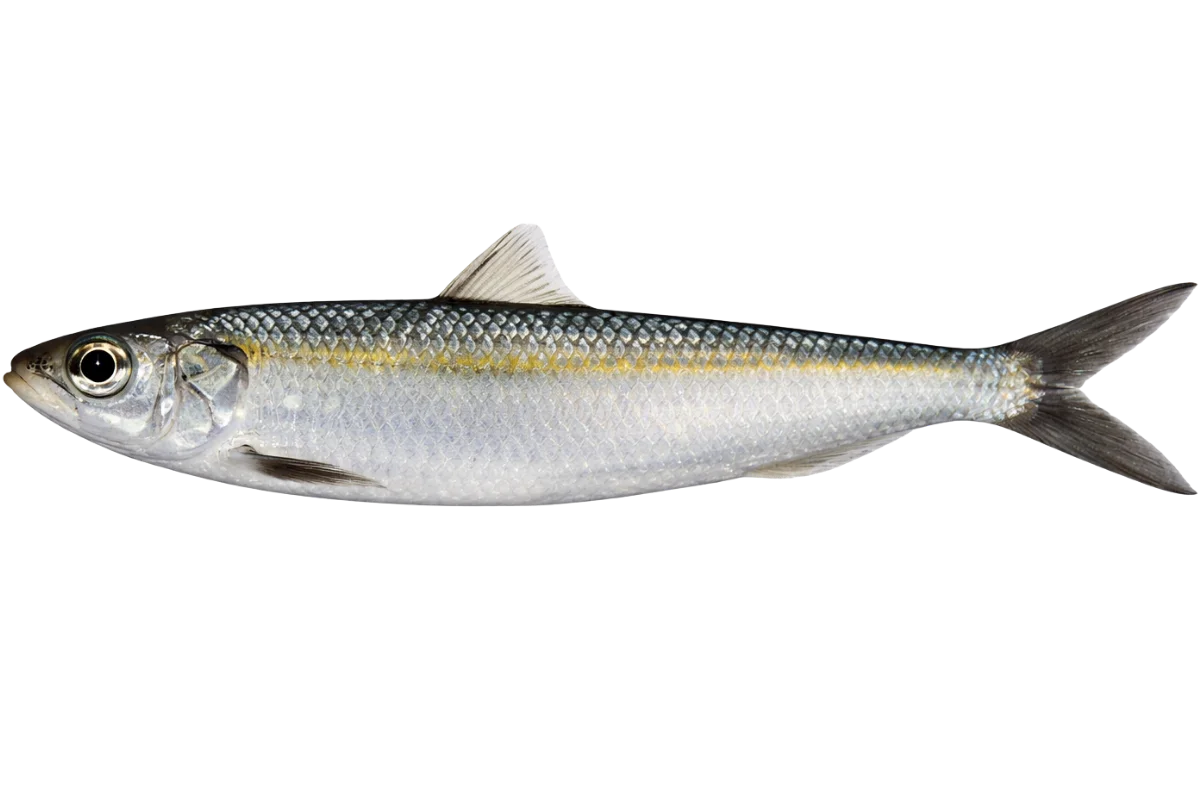
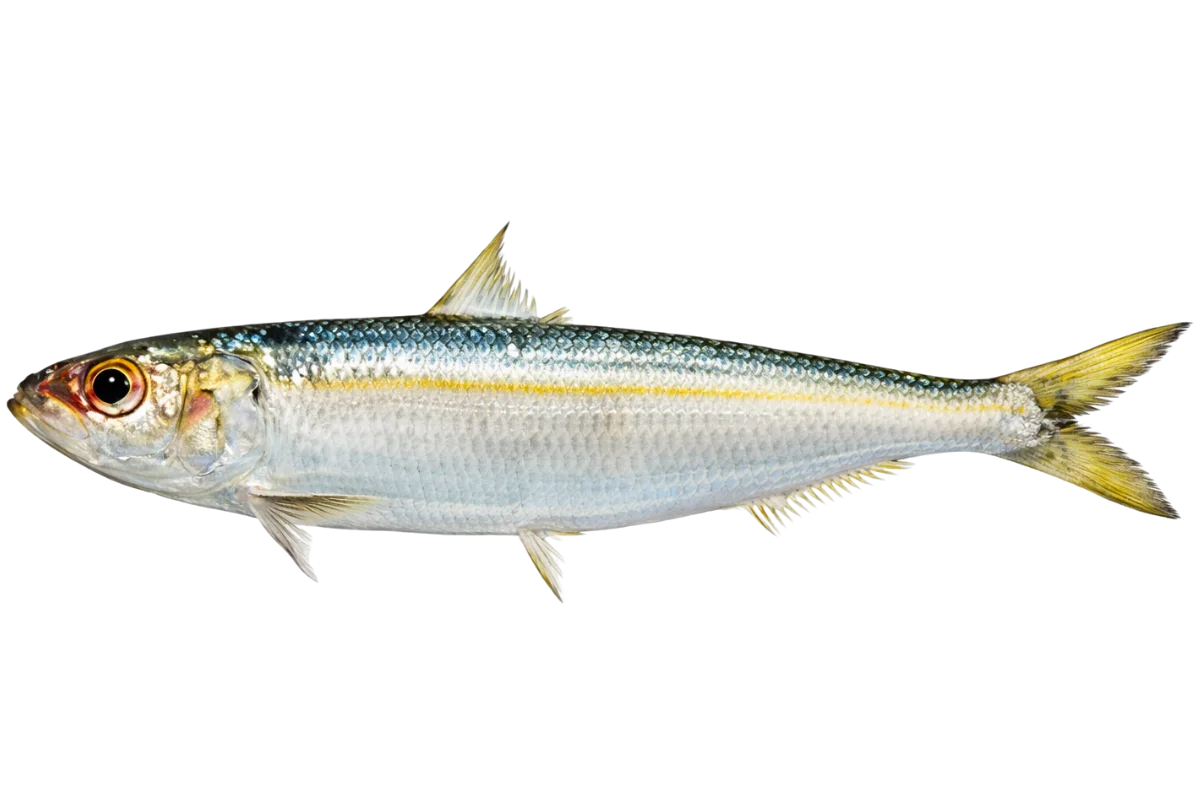
The Round Sardinella, which is also commonly referred to as the Spanish Sardine or the Gilt Sardine, is one of the most common small pelagic fish of the Mediterranean. Although it is often sold alongside sardines or confused with them, it is a separate species with its own characteristics. The body is elongated and laterally compressed with a blue-green colour on the back and silver on the sides.
The most defining feature that distinguishes it from the sardine is its belly. If you stroke the belly of the Round Sardinella from the tail towards the head, you will feel that it is rough and sharp like a saw or a knife because of the special scales that form a keel. In contrast, the belly of the sardine is smooth and rounded. Furthermore, the Round Sardinella has a characteristic golden band that runs horizontally across its body, which explains its scientific name, though this often fades after the fish's death.
This is a purely pelagic species that lives in large schools which move constantly. It prefers warm waters and is more abundant in the Southern Mediterranean. It is encountered at depths ranging from the surface down to 350 metres. It exhibits strong daily vertical migration, remaining in deeper waters for protection during the day and rising en masse to the surface at night to feed.
It is generally larger than the common sardine. The usual length of capture is 15 to 25 centimetres. However, it can reach and exceed 30 centimetres in length, with a maximum of 33 centimetres.
The animal is a plankton feeder. It swims with its mouth open, filtering water through its gills to retain zooplankton such as copepods and larvae, along with phytoplankton. Its ability to feed on both types of plankton gives it a survival advantage over other species.
Reproduction of the Round Sardinella takes place during the warm months of the year, in contrast to the sardine, which prefers cold periods. In the Mediterranean, this period extends mainly from July to September, during the summer and early autumn, when the waters are warm.
It is caught in bulk along with the sardine and the anchovy mainly by purse seines and secondarily by trawls. It has very low commercial value, even lower than that of sardines. Its local names often refer to the many and annoying bones found in its meat, which make it difficult to eat. It is usually salted or filleted, marinated to soften the bones, or used as excellent bait for longlines.
The International Union for Conservation of Nature classifies the Round Sardinella as a species of Least Concern. Scientific studies consider it an indicator of climate change in the Mediterranean. Due to its preference for warm waters, researchers have observed that its populations are increasing and expanding northward, a phenomenon known as tropicalisation. In years with high temperatures, the Round Sardinella tends to dominate at the expense of the cold-seeking sardine.
| Country | Local Name |
|---|---|
| 🇮🇹 Italy | Alaccia |
| 🇪🇸 Spain | Alacha |
| 🇫🇷 France | Allache |
| 🇹🇷 Turkey | Büyük sardalya |
| 🇲🇹 Malta | Nemusa |
| 🌍 North Africa (Tunisia/Libya/Egypt) | Allache or Samak al frissa |
| 🌊 Adriatic Coast (Croatia/Slovenia) | Srdela golema |
| 🇬🇷 Greece | Frissa or Triritsa or Sardelomana |