
Pomatomus saltatrix
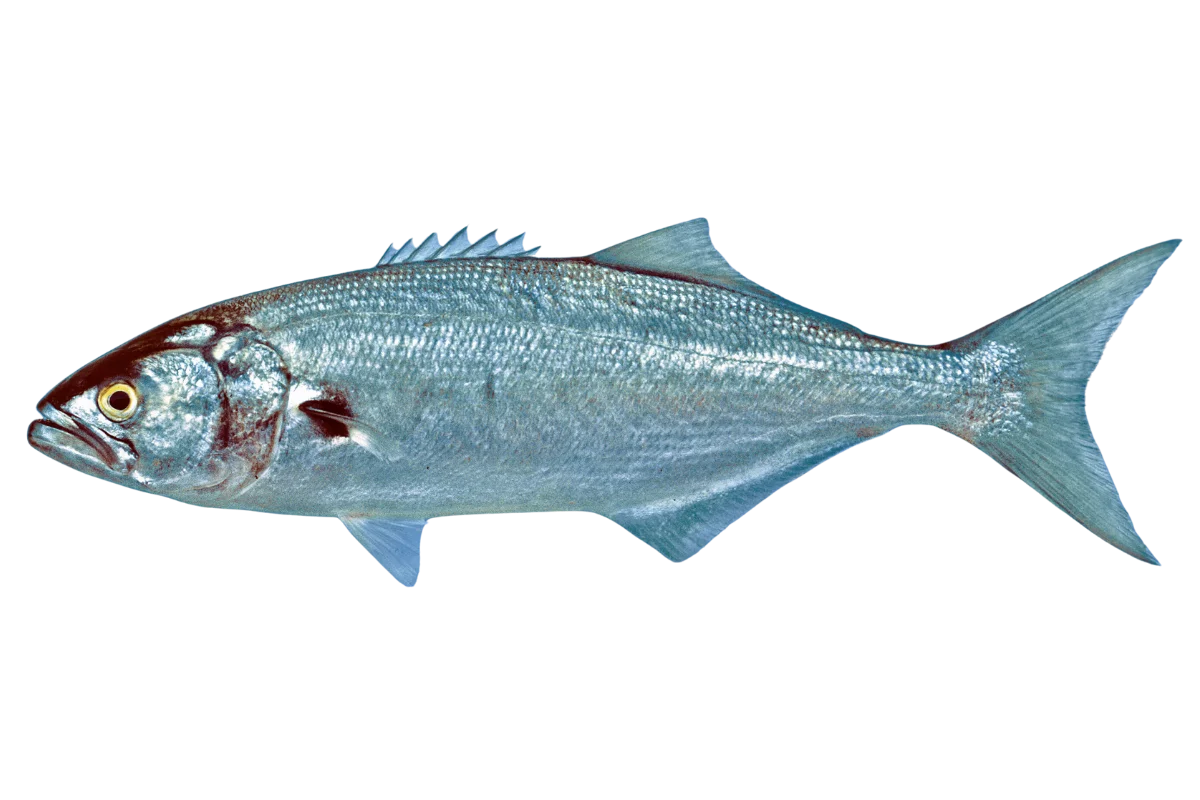
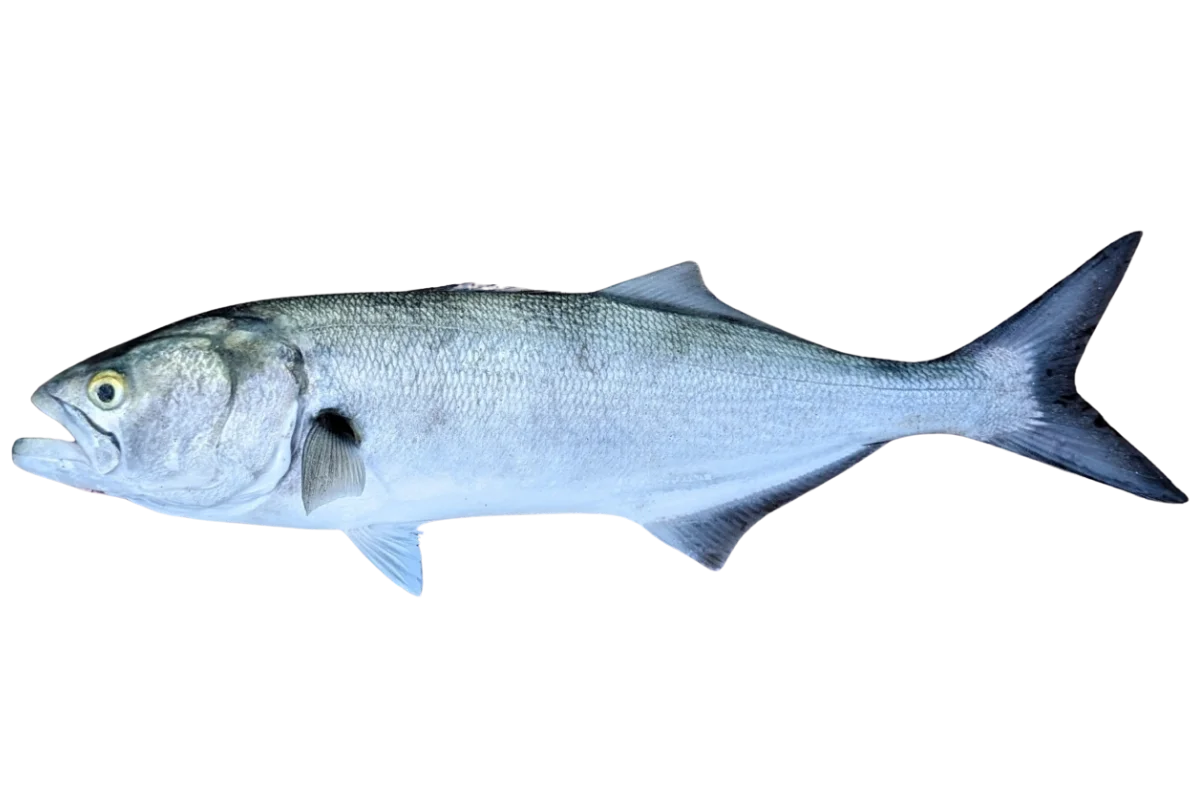
The Bluefish possesses extremely sharp razor-like teeth. It can cause very serious injury and deep cuts to fingers, even when the fish is out of the water. Great caution is required during hook removal, and the use of specific tools such as pliers or a lip grip is essential for safety.
The Bluefish is one of the strongest and most aggressive hunters in the sea. Its scientific name refers to a dancer because of the impressive jumps it performs out of the water when it fights to be free. The body is hydrodynamic, shaped like a torpedo, silver in colour, and has a distinct grey-blue or greenish tint on the back. The most defining feature is the mouth, which contains a row of triangular, compressed, and incredibly sharp teeth that lock together. This allows the fish to cut through its prey's flesh with ease.
This is a coastal pelagic species and a great traveller. It lives and hunts along the entire coastline from beaches and river estuaries to harbours and reefs. It usually moves at depths between 1 and 200 metres. It is a migratory fish that follows schools of smaller fish for food, and it prefers warm and temperate waters.
The common length is between 30 and 60 centimetres, with weights ranging from half a kilo to 3 kilograms. However, it can reach a maximum length of 1.2 metres and a weight of 14 kilograms.
Breeding takes place during the warm months, mainly from July to September, in the Mediterranean. It spawns its eggs in the open sea, which are pelagic and drift with the currents.
Fisheries & Economic Value
It is one of the most popular catches for recreational anglers due to its strength and fighting spirit. It is caught by surface trolling, spinning, and using live bait. The meat is tasty but has a specific requirement because it must be bled immediately after capture and consumed very fresh, or the flavour quickly becomes heavy and the flesh softens.
The International Union for Conservation of Nature classifies the Bluefish as Vulnerable on a global scale because populations face significant pressure from overfishing. In the Mediterranean although there are no signs of total collapse a decrease in the number of large individuals has been observed. Scientific studies show that water temperature plays a decisive role in its migrations, with fish moving north or south to find ideal thermal limits between 14 and 30 degrees Celsius. Furthermore, biological research has confirmed that it grows very quickly in the first years of life, reaching 25 to 30 centimetres by the end of the first year.
| Country | Local Name |
|---|---|
| 🇮🇹 Italy | Pesce serra |
| 🇪🇸 Spain | Anjova or Tallahams |
| 🇫🇷 France | Tassergal |
| 🇹🇷 Turkey | Lüfer or Çinekop |
| 🇲🇹 Malta | Serru |
| 🌍 North Africa (Tunisia/Libya/Egypt) | Qaradh or Qousroum |
| 🌊 Adriatic Coast (Croatia/Slovenia) | Strijelka |
| 🇬🇷 Greece | Gofari or Loufari |