
Sparus aurata
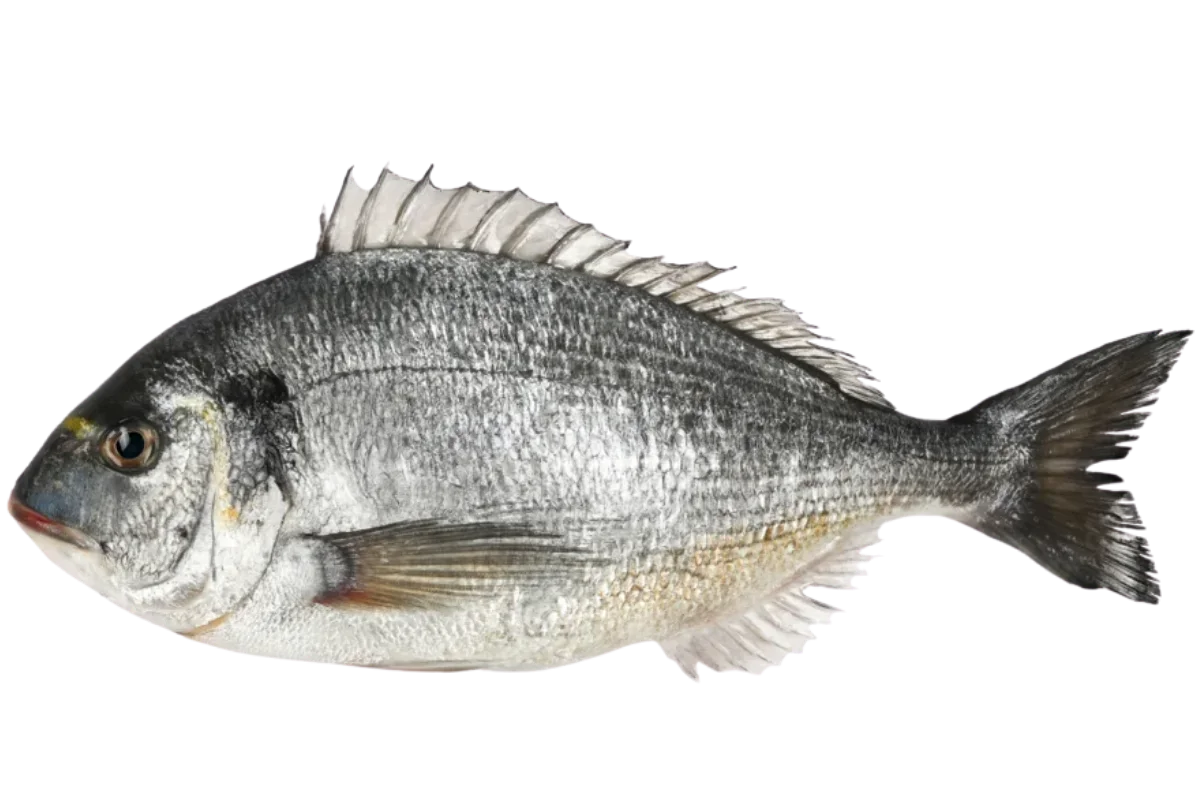
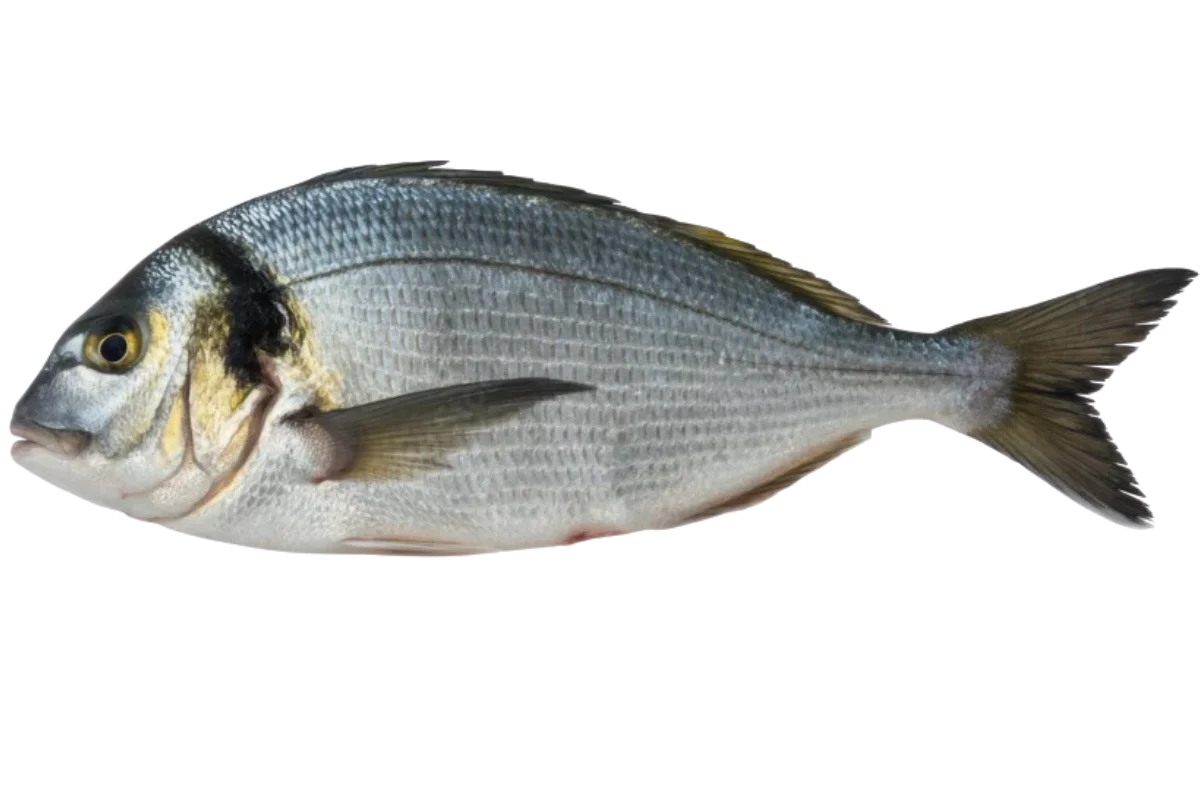
The Gilthead Seabream, which is also widely known as the Orata or the Dorada, is the most famous and beloved fish of the Mediterranean. It is the undisputed queen of both professional fishing and aquaculture, known for its characteristic golden crown and exceptional meat. Its scientific name is derived from the Latin word for gold. This refers to its most characteristic feature, an intense golden stripe between its eyes, like a golden eyebrow or crown. Additionally, it has a large red-orange spot on the gill cover, which immediately distinguishes it from other seabreams, such as the white seabream.
A significant difference exists between wild and farmed individuals. The wild Gilthead Seabream has a much brighter silver colour with an intense golden arc and clear, bright fins, while the body is more slender and athletic. In contrast, the farmed fish is often darker and dull grey with a stockier and thicker body, while it may lack scales due to friction in the nets.
This is a bottom-dwelling fish with an oval and high body and a laterally compressed body. Its head is large and strong, while being designed to break shells. It is a euryhaline species, which means it can withstand large changes in salinity. For this reason, we find it everywhere on rocky and muddy bottoms, in Posidonia seagrass meadows, and inside lagoons and river estuaries, where the waters are brackish. It usually lives in shallow waters from the surface to 30 metres deep, although large individuals descend deeper, reaching 150 metres.
The usual length ranges from 25 to 35 centimetres. However, the wild Gilthead Seabream can grow to a large size, exceeding 70 centimetres and weighing 6 to 7 kilograms, with a maximum recorded weight of 17.2 kilograms.
The Gilthead Seabream has incredibly strong jaws. It has four to six front canine teeth for grabbing and rows of molars at the back for crushing. It feeds mainly on hard prey such as mussels, clams, crabs, and sea urchins, which it breaks with ease. It also feeds on fish and cephalopods. It poses a significant threat to mussel farms because it can crush shells.
The species is a protandrous hermaphrodite. It is born and matures sexually as a male at the age of one to two years. Later, at the age of two to three years, it changes sex and becomes a female. Reproduction occurs in the autumn and winter, primarily from October to December, and often takes place in lagoons or shallow waters.
It is caught with nets and longlines and is a favourite target for shore rods using mussels or crabs as bait, as well as for spearfishing. It possesses enormous commercial value. It is one of the most important fish in the Mediterranean, and, due to massive aquaculture production exceeding 100,000 tonnes annually, it is available year-round at an affordable price and is a staple of the local diet. The minimum permitted catch size in the Mediterranean is 20 centimetres.
The International Union for Conservation of Nature classifies the Gilthead Seabream as a species of Least Concern at a global level. Scientific studies have shown that farmed fish may escape and interbreed with wild populations, which can affect the genetic structure of wild stocks. Furthermore, research into its diet showed that it adapts easily, consuming more fish in spring and molluscs in summer and autumn.
| Country | Local Name |
|---|---|
| 🇮🇹 Italy | Orata |
| 🇪🇸 Spain | Dorada |
| 🇫🇷 France | Daurade royale |
| 🇹🇷 Turkey | Çipura |
| 🇲🇹 Malta | Aurata |
| 🌍 North Africa (Tunisia/Libya/Egypt) | Daurade or Samak al tsipoura |
| 🌊 Adriatic Coast (Croatia/Slovenia) | Podlanica or Komarča |
| 🇬🇷 Greece | Tsipoura or Alaniara |