
Scomberomorus commerson
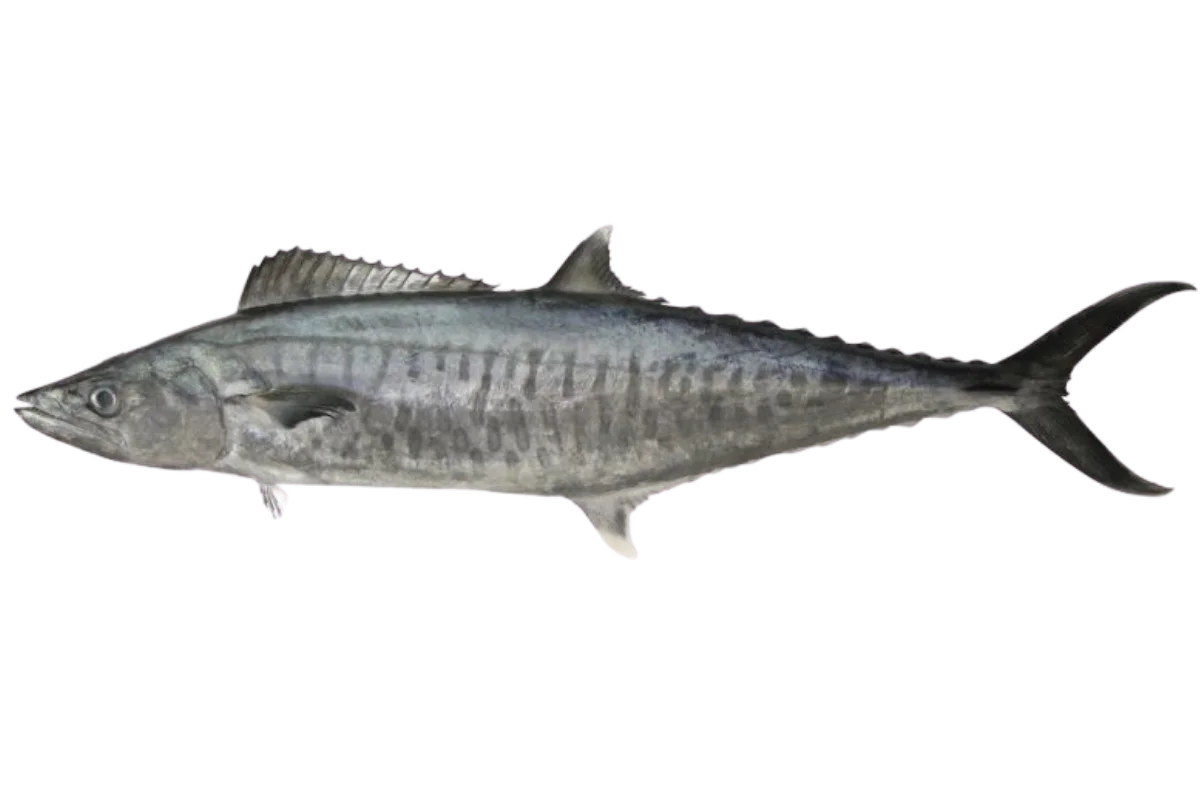
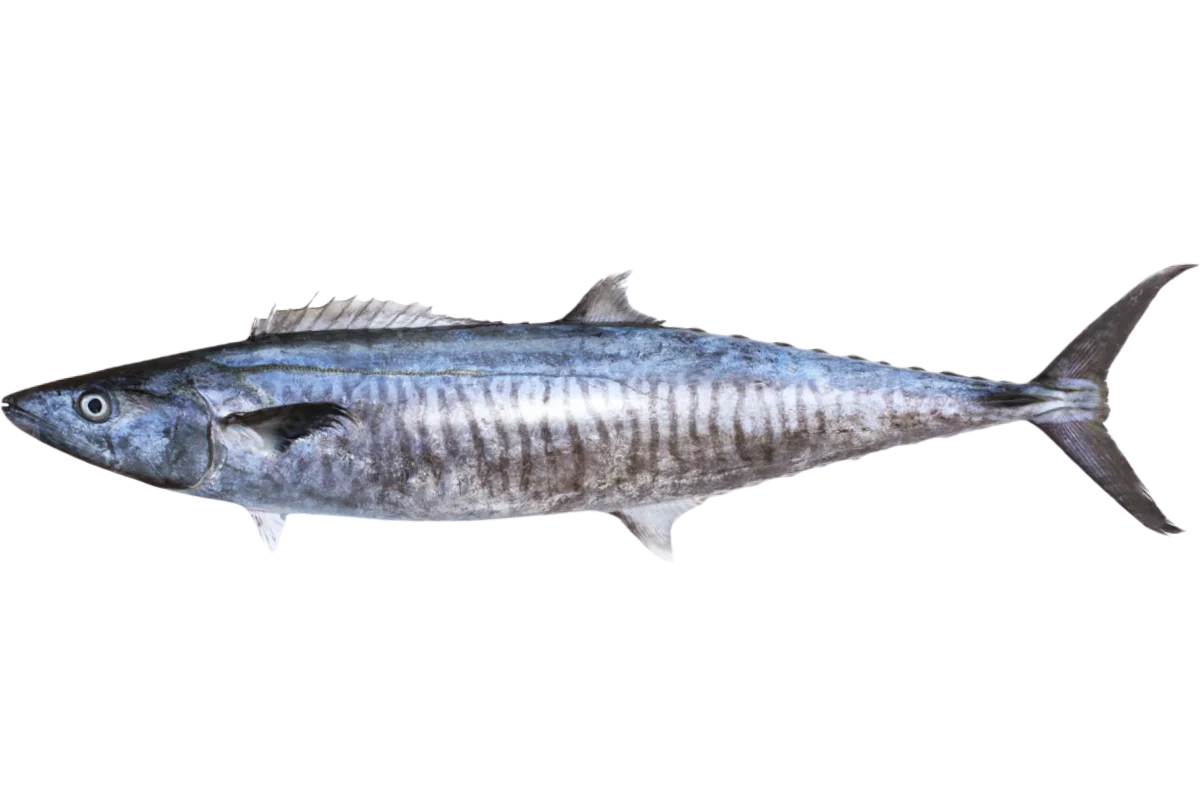
The Narrow barred Spanish Mackerel, also widely known as the King Mackerel, the Narrow barred Mackerel, or the Kingfish, is one of the most impressive and powerful fish to have invaded the Mediterranean in recent years. It represents a Lessepsian migrant, meaning it is a species that passed from the Red Sea through the Suez Canal and established itself permanently in regional waters. It belongs to the Scombridae family, like tunas, but it stands out immediately for its appearance.
The body is long, slender, and spindle-shaped, designed for high speeds. The colour is iridescent silver-blue on the back and silver-white on the belly. Its most characteristic feature consists of many thin, dark vertical stripes that descend from the back towards the belly, resembling the markings of a tiger or a zebra. This pattern is completely different from that of the Atlantic Bonito, which possesses thick diagonal lines only on its back. Additionally, the mouth is fearsome because it features a row of huge, triangular, laterally compressed teeth that are razor-sharp and function like scissors to cut prey in half with a single bite.
This is a coastal pelagic species that lives and hunts throughout the water column, from the surface down to 200 metres. Although it originates from the Indian and Pacific Oceans, it has adapted perfectly to the warm waters of the Eastern Mediterranean around Cyprus, Rhodes, Crete, and the Dodecanese. It often approaches very close to the coast, especially near capes and reefs, and areas with strong currents, where it seeks its food.
The Narrow barred Spanish Mackerel is much larger than the common bonito. It can reach a maximum length of 2.4 metres and a weight of 70 kilograms. In regional waters, the fish caught usually range from 3 to 15 kilograms, although larger individuals have been recorded.
The animal is a ruthless apex predator. It hunts in small groups or, in the case of large individuals, solitarily and feeds mainly on smaller pelagic fish that live in schools, such as sardines, anchovies, and round herrings. It also consumes squid and shrimp. Its technique involves attacking at high speed, wounding prey with its sharp teeth, and then eating them.
Reproduction takes place during the warm months. In the Eastern Mediterranean, this period extends mainly from May to July. The eggs are pelagic. It is a species with a very fast growth rate, especially in its first years of life.
It represents a valuable and sought-after catch. It is caught professionally with set nets and purse seines. For recreational fishers, it is a great challenge because it requires specialised equipment, such as wire traces, due to its teeth, which cut fishing lines instantly. It is caught using surface and bottom trolling, spinning, and spearfishing. The meat is of exceptional quality: white, firm, and very delicious, considered by many to be superior to common bonito or tuna, and ideal for grilling or sushi and sashimi.
The International Union for Conservation of Nature classifies the species as Near Threatened globally, but in the Mediterranean, its range continues to expand. Scientific studies have shown that the Narrow barred Spanish Mackerel is one of the most successful invaders because it competes effectively with native predators such as bluefish and leerfish for food and space. Furthermore, research has shown that females live longer and reach a larger size than males.
| Country | Local Name |
|---|---|
| 🇮🇹 Italy | Sgombro spagnolo |
| 🇪🇸 Spain | Carite estriado |
| 🇫🇷 France | Thazard rayé |
| 🇹🇷 Turkey | Cizgili palamut or Tombak |
| 🇲🇹 Malta | Pizzintun |
| 🌍 North Africa (Tunisia/Libya/Egypt) | Thazard or Samak al tainiopalamida |
| 🇮🇱 Israel | Narrow-barred Spanish Mackerel |
| 🇬🇷 Greece | Tainiopalamida |