
Atlantic Mackerel or Chub Mackerel: how to tell them apart
The two fish next to each other, fact by fact.
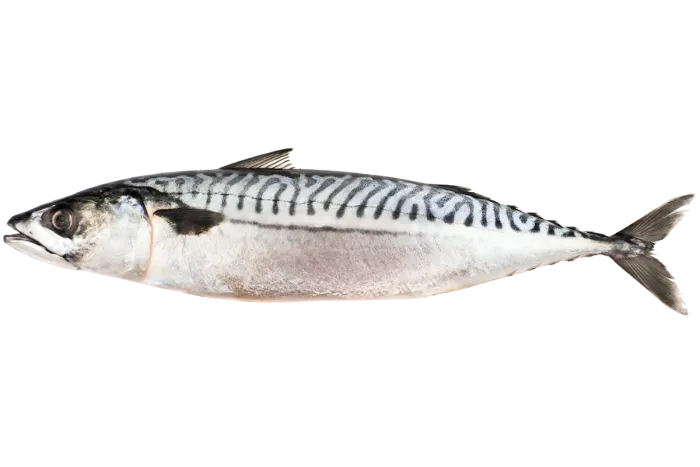 Atlantic Mackerel
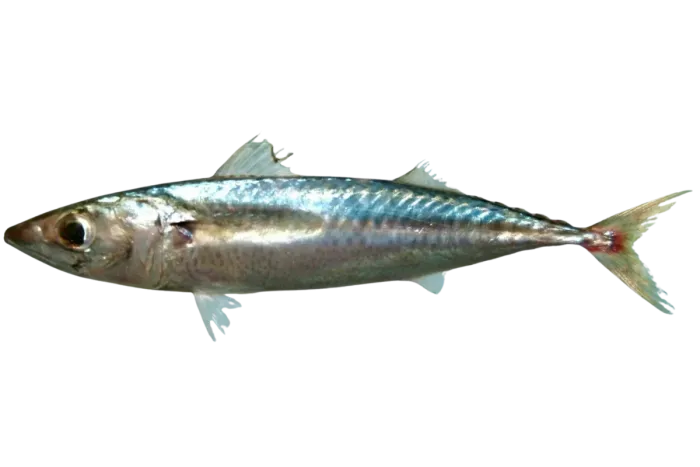 Chub Mackerel
How to tell them apart
Look at the belly and the eye. The Atlantic Mackerel has a clean silver belly and a small eye. The Chub Mackerel has grey spots and blotches on the sides and belly, and a clearly larger eye.
Scientific name
Atlantic Mackerel
Scomber scombrus
Chub Mackerel
Scomber colias
Also known as
Atlantic Mackerel
Skoumbri, Tsiros
Chub Mackerel
Kolios
Is it eaten?
Atlantic Mackerel
Yes
Chub Mackerel
Yes
Is it dangerous?
Atlantic Mackerel
No
Chub Mackerel
No
Usual size
Atlantic Mackerel
20 to 35 cm
Chub Mackerel
20 to 35 cm
Fishing season
Atlantic Mackerel
April to October
Chub Mackerel
May to October
Category
Atlantic Mackerel
Pelagic & Open Sea Fish
Chub Mackerel
Pelagic & Open Sea Fish
Conservation status
Atlantic Mackerel
Least Concern (LC)
Chub Mackerel
Least Concern (LC)
What it looks like
Atlantic Mackerel
The Atlantic Mackerel, which is also widely known as the Mackerel, is one of the most famous, fast, and nutritious fish of the regional seas. It is a pelagic fish belonging to the Scombridae family, known for its beautiful pattern on its back and its rich flavour. The body is spindle-shaped and extremely hydrodynamic, designed for fast, nonstop swimming.
Chub Mackerel
The Chub Mackerel is one of the most well-known and beloved surface fish of the region. It belongs to the Scombridae family and is a close relative of the Atlantic Mackerel and the Tuna. The body is elongated and hydrodynamic like a torpedo, and it is designed to swim quickly.
Where it lives
Atlantic Mackerel
This is a purely pelagic and cold-water species that lives in the open sea. It has no permanent home because the school travels constantly, making extensive migrations. In the spring and summer, the schools approach the coasts and rise to the surface to feed, while in the winter, they withdraw to deeper waters of up to 250 metres, and their activity decreases significantly.
Chub Mackerel
This is a strictly pelagic fish that lives in the open sea, forming massive, compact schools. It usually moves at depths from the surface down to 300 metres. The species migrates constantly, and during the summer months, schools approach the coasts in large numbers to feed and reproduce, while in winter, they withdraw to deeper waters.
Everything about Atlantic Mackerel Everything about Chub Mackerel
More fish that get mixed up
- Albacore or Atlantic Bluefin Tuna
- Albacore or Little Tunny
- Anchovy or Pilchard
- Angular Roughshark or Spiny Dogfish
- Atlantic Bonito or Little Tunny
- Blue Runner or Horse Mackerel
- Blue Whiting or Hake
- Brill or Turbot
- Broadtail Shortfin Squid or Squid
- Brown Comber or Comber
- Comber or Painted Comber
- Conger or Eel
- Dogtooth Grouper or White Grouper
- Dogtooth Grouper or Wreckfish
- Dusky Grouper or Mottled Grouper
- Flying Fish or Flying Gurnard
- Garfish or Halfbeak
- Greater Amberjack or Leerfish
- Mediterranean Spearfish or Swordfish
- Nursehound or Small spotted Catshark
- Pilchard or Round Sardinella
- Red Mullet or Striped Red Mullet
- Stingray or Thornback Ray