
Conger or Eel: how to tell them apart
The two fish next to each other, fact by fact.
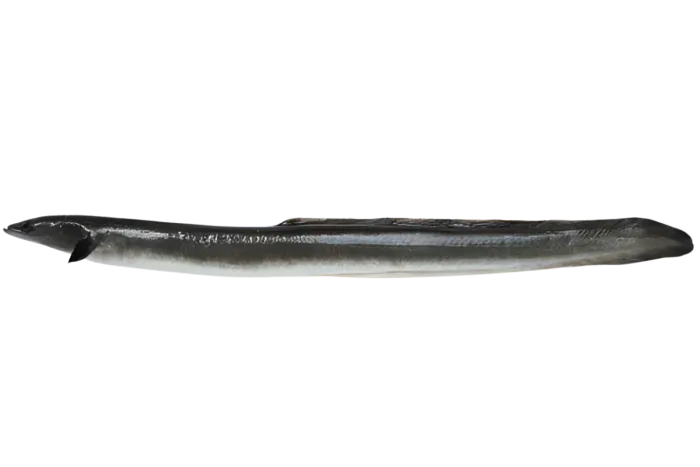 Conger
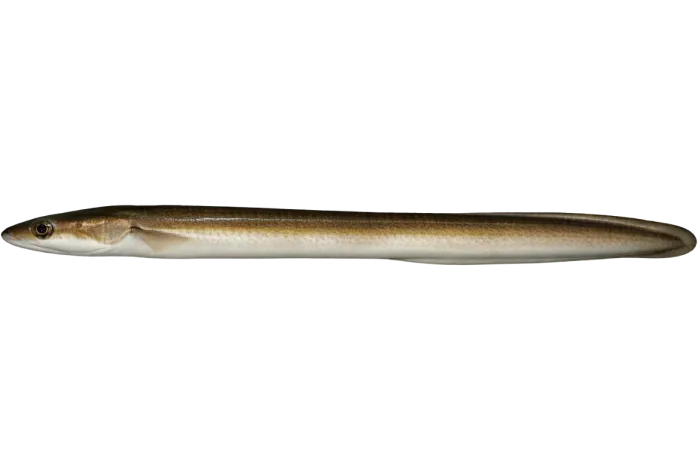 Eel
How to tell them apart
Look at where the back fin begins. On the Conger it starts well forward, just behind the side fins. On the Eel it starts much further back, and the lower jaw juts out. The Conger lives only in the sea and grows far larger, while the Eel is found in rivers, lakes and lagoons.
Scientific name
Conger
Conger conger
Eel
Anguilla anguilla
Also known as
Conger
Moungri
Eel
Cheli
Is it eaten?
Conger
Yes
Eel
With caution
Is it dangerous?
Conger
Yes
Eel
Yes
Usual size
Conger
60 to 150 cm
Eel
No data
Fishing season
Conger
October to March
Eel
No data
Category
Conger
Reef & Rocky Bottom Fish
Eel
Sandy & Estuary Fish
Conservation status
Conger
Least Concern (LC)
Eel
Critically Endangered (CR)
What it looks like
Conger
The European Conger is one of the most imposing and powerful fish in the regional seas, with a body resembling a snake. It belongs to the Congridae family and is known for its muscular strength and nocturnal lifestyle. The skin is smooth and lacks scales, and it is covered with a thick layer of mucus, making it extremely slimy. The colour is usually dark grey or black on the back and light on the belly.
Eel
The European Eel, also known as the Common Eel, is one of the most mysterious and wonderful creatures of the aquatic world. Although it resembles a snake and spends most of its life in freshwater, it is a pure fish that begins and ends its life in a distant part of the Atlantic, the Sargasso Sea. The body is snake-like, cylindrical, and extremely flexible.
Where it lives
Conger
This is a benthic species that lives on rocky bottoms, inside holes and crevices, and on shipwrecks. Young individuals live in shallow coastal waters, while they move to greater depths, reaching 1000 metres as they grow. It is a strictly nocturnal fish. During the day, it remains hidden in its nest, often with other congers, and it ventures out only at night to hunt.
Eel
This is a catadromous species, meaning it lives in fresh water but breeds in the sea. It is encountered in rivers and lakes, swamps, and lagoons as well as in brackish waters. It is extremely resilient and can live out of water for considerable periods by breathing through its skin. It can even crawl on land through wet grass to pass from one lake to another or to bypass obstacles.
Everything about Conger Everything about Eel
More fish that get mixed up
- Albacore or Atlantic Bluefin Tuna
- Albacore or Little Tunny
- Anchovy or Pilchard
- Angular Roughshark or Spiny Dogfish
- Atlantic Bonito or Little Tunny
- Atlantic Mackerel or Chub Mackerel
- Blue Runner or Horse Mackerel
- Blue Whiting or Hake
- Brill or Turbot
- Broadtail Shortfin Squid or Squid
- Brown Comber or Comber
- Comber or Painted Comber
- Dogtooth Grouper or White Grouper
- Dogtooth Grouper or Wreckfish
- Dusky Grouper or Mottled Grouper
- Flying Fish or Flying Gurnard
- Garfish or Halfbeak
- Greater Amberjack or Leerfish
- Mediterranean Spearfish or Swordfish
- Nursehound or Small spotted Catshark
- Pilchard or Round Sardinella
- Red Mullet or Striped Red Mullet
- Stingray or Thornback Ray