
Nursehound or Small spotted Catshark: how to tell them apart
The two fish next to each other, fact by fact.
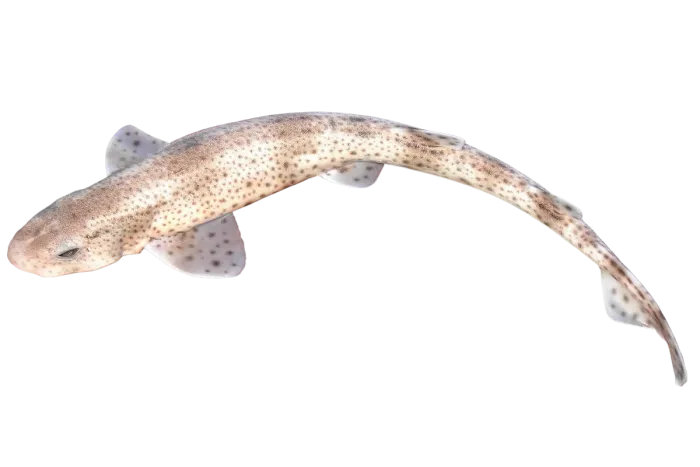 Nursehound
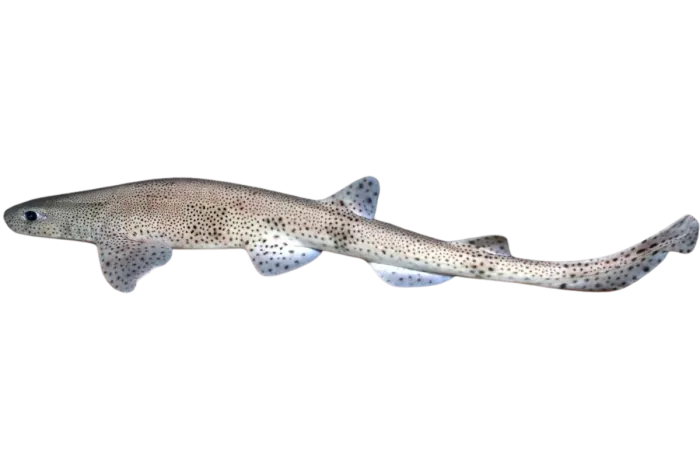 Small spotted Catshark
How to tell them apart
The Small spotted Catshark is slim, with many small dark spots, and rarely passes 60 to 70 cm. The Nursehound is stouter and much larger, over one metre, with bigger and more widely spaced spots.
Scientific name
Nursehound
Scyliorhinus stellaris
Small spotted Catshark
Scyliorhinus canicula
Also known as
Nursehound
Gatos, Megalo Skylopsaro, Skyli
Small spotted Catshark
Skylopsaraki, Skylaki, Skyloulis
Is it eaten?
Nursehound
Yes
Small spotted Catshark
Yes
Is it dangerous?
Nursehound
No
Small spotted Catshark
No
Usual size
Nursehound
No data
Small spotted Catshark
20 to 50 cm
Category
Nursehound
Sharks
Small spotted Catshark
Sharks
Conservation status
Nursehound
Vulnerable (VU)
Small spotted Catshark
Least Concern (LC)
What it looks like
Nursehound
The Nursehound is a robust bottom-dwelling shark belonging to the family Scyliorhinidae, and it is considered the larger relative of the small-spotted catshark. The skin is beige or brown, grey, and feels very rough to the touch. Large, prominent dark spots are spread across the body, distinguishing this species from its smaller relatives because these markings resemble a leopard pattern.
Small spotted Catshark
The Small spotted Catshark, which is also commonly referred to as the Lesser Spotted Dogfish or the Roughhound, is one of the most abundant, smallest and harmless sharks of the regional seas. It belongs to the Scyliorhinidae family, which translates to dog noses due to their characteristic snouts. The body is elongated and slender, with skin that is extremely rough like sandpaper.
Where it lives
Nursehound
This shark is a permanent resident of the Mediterranean Sea, living almost exclusively on the seabed and preferring hard substrates. It is commonly found on rocky bottoms and in areas with coral formations or gorgonians, where it can find shelter within the reef. Its depth range is 20-150 metres, although it has been recorded at greater depths.
Small spotted Catshark
This is a benthic species that spends most of its life on the seabed. It prefers sandy, muddy, or coralligenous bottoms as well as areas with seaweed. It is encountered across a wide range of depths from shallow waters of 10 metres down to 400 metres, although it is more common on the continental shelf between 50 and 150 metres. It is a nocturnal species.
Everything about Nursehound Everything about Small spotted Catshark
More fish that get mixed up
- Albacore or Atlantic Bluefin Tuna
- Albacore or Little Tunny
- Anchovy or Pilchard
- Angular Roughshark or Spiny Dogfish
- Atlantic Bonito or Little Tunny
- Atlantic Mackerel or Chub Mackerel
- Blue Runner or Horse Mackerel
- Blue Whiting or Hake
- Brill or Turbot
- Broadtail Shortfin Squid or Squid
- Brown Comber or Comber
- Comber or Painted Comber
- Conger or Eel
- Dogtooth Grouper or White Grouper
- Dogtooth Grouper or Wreckfish
- Dusky Grouper or Mottled Grouper
- Flying Fish or Flying Gurnard
- Garfish or Halfbeak
- Greater Amberjack or Leerfish
- Mediterranean Spearfish or Swordfish
- Pilchard or Round Sardinella
- Red Mullet or Striped Red Mullet
- Stingray or Thornback Ray