
Blue Runner or Horse Mackerel: how to tell them apart
The two fish next to each other, fact by fact.
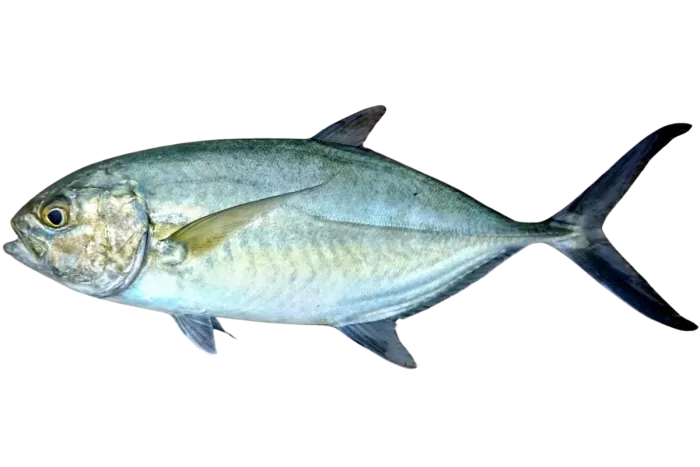 Blue Runner
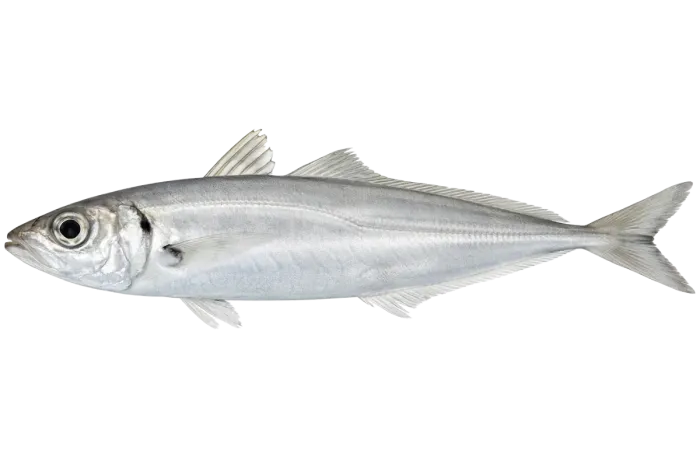 Horse Mackerel
How to tell them apart
The Horse Mackerel is slim, with a large eye and a row of hard, plate-like scales along the whole lateral line. The Blue Runner has a deeper body and the hard scales only on the straight rear part of the line, near the tail. The Blue Runner also grows larger.
Scientific name
Blue Runner
Caranx crysos
Horse Mackerel
Trachurus trachurus / Trachurus mediterraneus
Also known as
Blue Runner
Kokkali, Karagkida, Sampani, Souros, Trachouri
Horse Mackerel
Savridi, Safridi
Is it eaten?
Blue Runner
Yes
Horse Mackerel
Yes
Is it dangerous?
Blue Runner
No
Horse Mackerel
No
Usual size
Blue Runner
30 to 50 cm
Horse Mackerel
40 to 50 cm
Fishing season
Blue Runner
July to November
Horse Mackerel
May to November
Category
Blue Runner
Pelagic & Open Sea Fish
Horse Mackerel
Pelagic & Open Sea Fish
Conservation status
Blue Runner
Least Concern (LC)
Horse Mackerel
Vulnerable (VU)
What it looks like
Blue Runner
The Blue Runner is one of the most powerful, fast, and widespread predatory fish in coastal waters. It belongs to the Carangidae family, which also includes amberjacks and leerfish. The body is silvery and hydrodynamic, shaped like a torpedo, with a slight greenish or golden tint on the back and a characteristic black spot on the gill cover.
Horse Mackerel
The Horse Mackerel, which is also widely known as the Scad or the Jack Mackerel, is one of the most abundant, common, and commercial fish of the Mediterranean. It is a small pelagic species known for the hard, bony plates on its tail, as well as its high nutritional value and very affordable price. The body is muscular and torpedo-shaped, silver in colour, turning blue-grey on the back.
Where it lives
Blue Runner
This is a coastal pelagic species that lives both at the surface and in mid-water layers. It forms large schools, especially when young, and frequents areas over reefs, shipwrecks, and sandy seabeds. It typically moves at depths between 1 and 100 metres. Juvenile individuals often seek protection under floating objects or even beneath jellyfish.
Horse Mackerel
This is a common small pelagic species that lives in large and populous schools. It exhibits strong seasonal vertical migration behaviour. In the summer, the schools move into shallower, coastal waters, usually from the surface to 100 metres, to feed. During the winter, they migrate to very deep waters, reaching up to 500 metres, where they remain near the bottom.
Everything about Blue Runner Everything about Horse Mackerel
More fish that get mixed up
- Albacore or Atlantic Bluefin Tuna
- Albacore or Little Tunny
- Anchovy or Pilchard
- Angular Roughshark or Spiny Dogfish
- Atlantic Bonito or Little Tunny
- Atlantic Mackerel or Chub Mackerel
- Blue Whiting or Hake
- Brill or Turbot
- Broadtail Shortfin Squid or Squid
- Brown Comber or Comber
- Comber or Painted Comber
- Conger or Eel
- Dogtooth Grouper or White Grouper
- Dogtooth Grouper or Wreckfish
- Dusky Grouper or Mottled Grouper
- Flying Fish or Flying Gurnard
- Garfish or Halfbeak
- Greater Amberjack or Leerfish
- Mediterranean Spearfish or Swordfish
- Nursehound or Small spotted Catshark
- Pilchard or Round Sardinella
- Red Mullet or Striped Red Mullet
- Stingray or Thornback Ray